If you are a school looking to find out more about The Children’s Literacy Charity, these questions might give you the information you need. If you would like to find out more, please email info@theclc.org.uk.
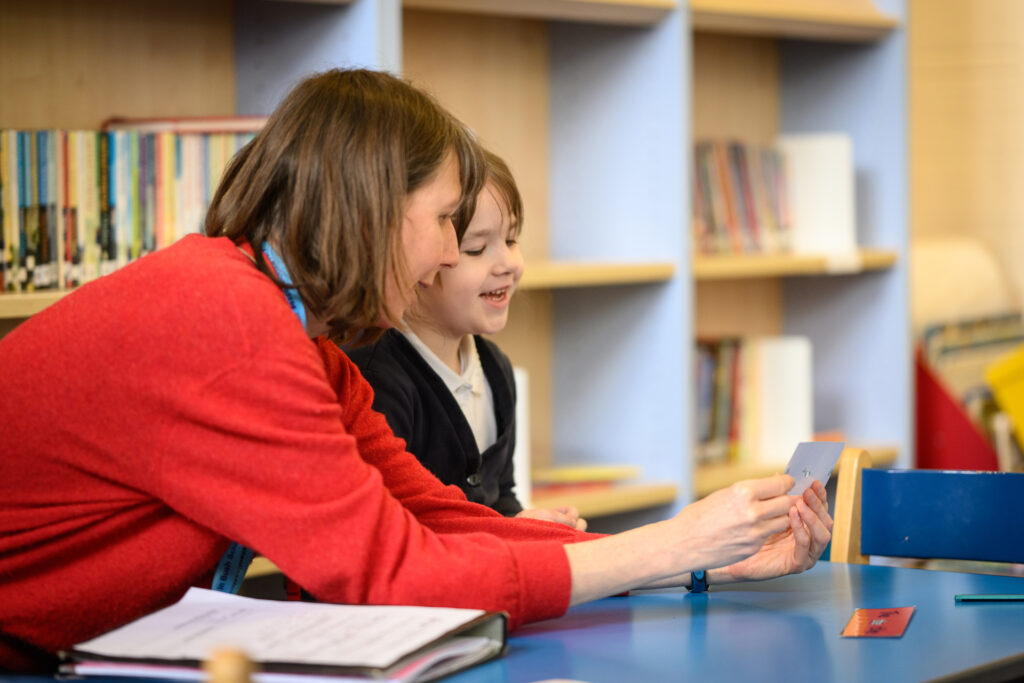
Our carefully structured, research-based programmes focus on closing literacy gaps rapidly. Tailored one-to-one and one-to-three sessions allow for precision tutoring that is hard to achieve in busy classrooms. Our expert tutors complement rather than replace the vital support TAs provide.
While volunteer reading programmes can be invaluable, they differ from our holistic and expert-led literacy interventions. Our tutors are trained professionals using evidence-based methods to accelerate progress. Children receive consistent, in person, tailored instruction rather than general reading practice. Some schools use volunteer reading schemes alongside our intervention, but they achieve different outcomes.
We employ, train and manage our tutors who are either qualified teachers or teaching assistants. As well as being experienced educators in their own right, we train them carefully in the delivery of our specialist, evidence-based programmes.
Our tutors become embedded in the school life – effectively they are part of your team but managed by us. While we work in close collaboration with partner schools, our tutors are managed and supported by our regional School Programme Managers (SPMs) and also the wider education team at the charity.
Tutors are recruited specifically for each new partner school.
Children typically visit our Labs twice a week for around 30–45 minutes. Sessions are timetabled with the school to minimise disruption and children attend at a different time each week so they don’t always miss the same lesson.
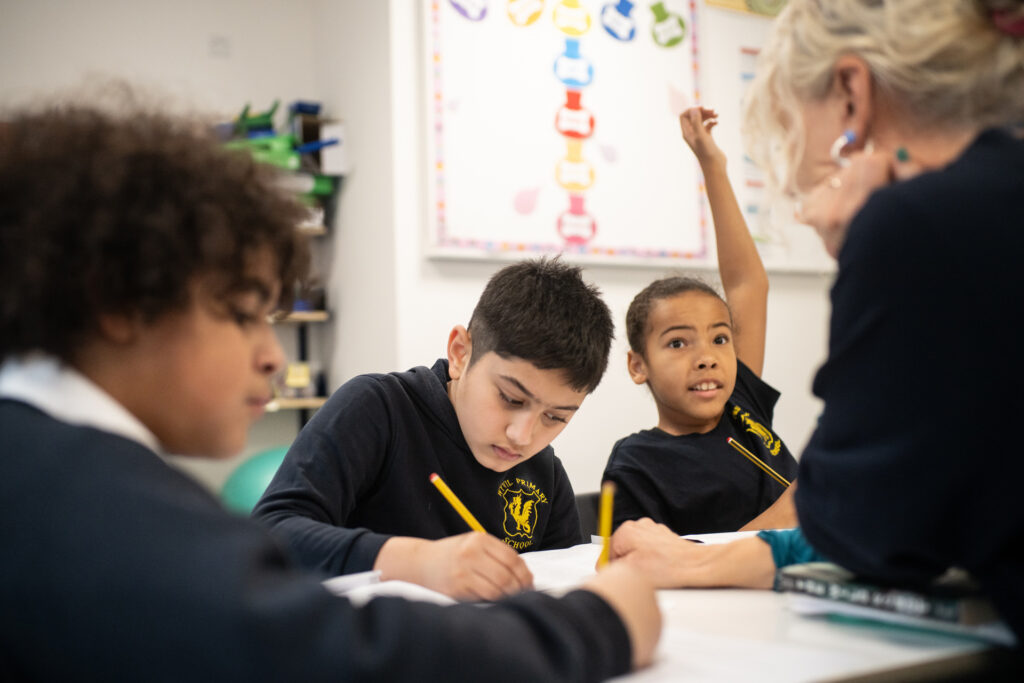
Research by the EEF shows that small group, out of class tuition can add an additional four months of progress over the course of a year. For children who are struggling to make progress in the mainstream classroom, an out of class intervention is often the best way to help them gain the essential skills and confidence needed to help them access learning more confidently.
Teachers regularly tell us that pupils return more focused, more motivated, and better able to participate fully in classroom activities after receiving our support.
While improvements in reading, writing and oracy are central, the charity’s broader impact lies in developing children’s independence, confidence and resilience, enabling them to engage more fully with learning and access high-quality classroom teaching.
Literacy Lab (KS1)
- After one month of tuition children make on average over 4 months of progress.
- On graduation children are on average 9 months ahead of age-related expectations.
Children develop greater fluency in phonics and apply this more effectively in both reading and writing. They build reading stamina and fluency, supporting improved comprehension and enjoyment of reading. Tutors also observe improvements in oracy skills, alongside stronger transcription and composition skills in writing.
Reading Lab (KS2/3)
- After the ten week programme children make on average seven month’s progress.
- Schools report significantly increased confidence and engagement with learning.
Children make significant gains in vocabulary knowledge, reading fluency and comprehension. Many children gain confidence in their reading ability and return to class lessons with greater engagement in reading and fuller participation in all lessons.
Story Lab (Early Years)
This programme is in its pilot stage. Initial indications show that children are expanding their vocabulary and developing stronger speaking and listening skills. Tutors also observe improvements in social and emotional development, alongside growing confidence in communication.
Strong literacy is the foundation of all learning. Without it, many pupils struggle to meet age-related expectations across the curriculum. At The Children’s Literacy Charity, we recognise that literacy catch-up and SEND are deeply connected.
Our interventions are designed to be part of a school’s inclusion framework, supporting pupils to belong, achieve and thrive. Using high-quality adaptive teaching methods, our tutors tailor sessions to meet individual needs, ensuring that all learners can access and engage with literacy in a meaningful way. We work in close partnership with schools and families, ensuring that our delivery aligns with individual support plans. Our programmes can form part of the targeted support offer for pupils with SEND, providing structured, consistent intervention that complements classroom provision.
By embedding literacy within a wider inclusive approach, we help schools ensure that every child has the opportunity to develop the skills they need to succeed.
Our focus is to support children from a disadvantaged background who are aged 4–14 and below age-expected reading levels, have poor comprehension or need tailored, small group support to make progress.
Classroom teachers work with their school to decide which of their children to refer to us, based on who would benefit the most.
Which Children do you Prioritise?
In 2024/25, 85% of the children we supported faced one or more of the following barriers:
- experiencing a lack of support at home and/or disrupted school
- coming from a disadvantaged background and living in areas of deprivation
- being eligible for pupil premium funding (PP) or free school meals (FSM)
- learning English as an Additional Language
- having parents or carers who also struggle with literacy
- having a special educational need such as dyslexia, dyspraxia or mild autism
The Children’s Literacy Charity maintains its own Safeguarding Policy and Procedures, which are reviewed and updated annually in line with the statutory guidance, Keeping Children Safe in Education.
All tutors receive safeguarding training as part of their induction, alongside mandatory annual refresher training. Tutors are required to adhere to both the safeguarding policies of the schools they work in and The Children’s Literacy Charity’s policy.
Schools contribute to the cost of our delivery which ensures the programme is sustainable, high-quality, and tailored to each setting. Funding supports employed, trained practitioners, bespoke resources, and ongoing monitoring of progress. We work hard to keep all central costs low so the majority of the cost of the programme is the employment of our specialist tutors.
Depending on the programme, schools typically contribute between 20-25% of cost; we then fundraise extensively to cover the 75-80% balance.
Please contact info@theclc.org.uk for specific programme costs. In some circumstances, we are able to benefit from additional funding subsidy so do please ask.