
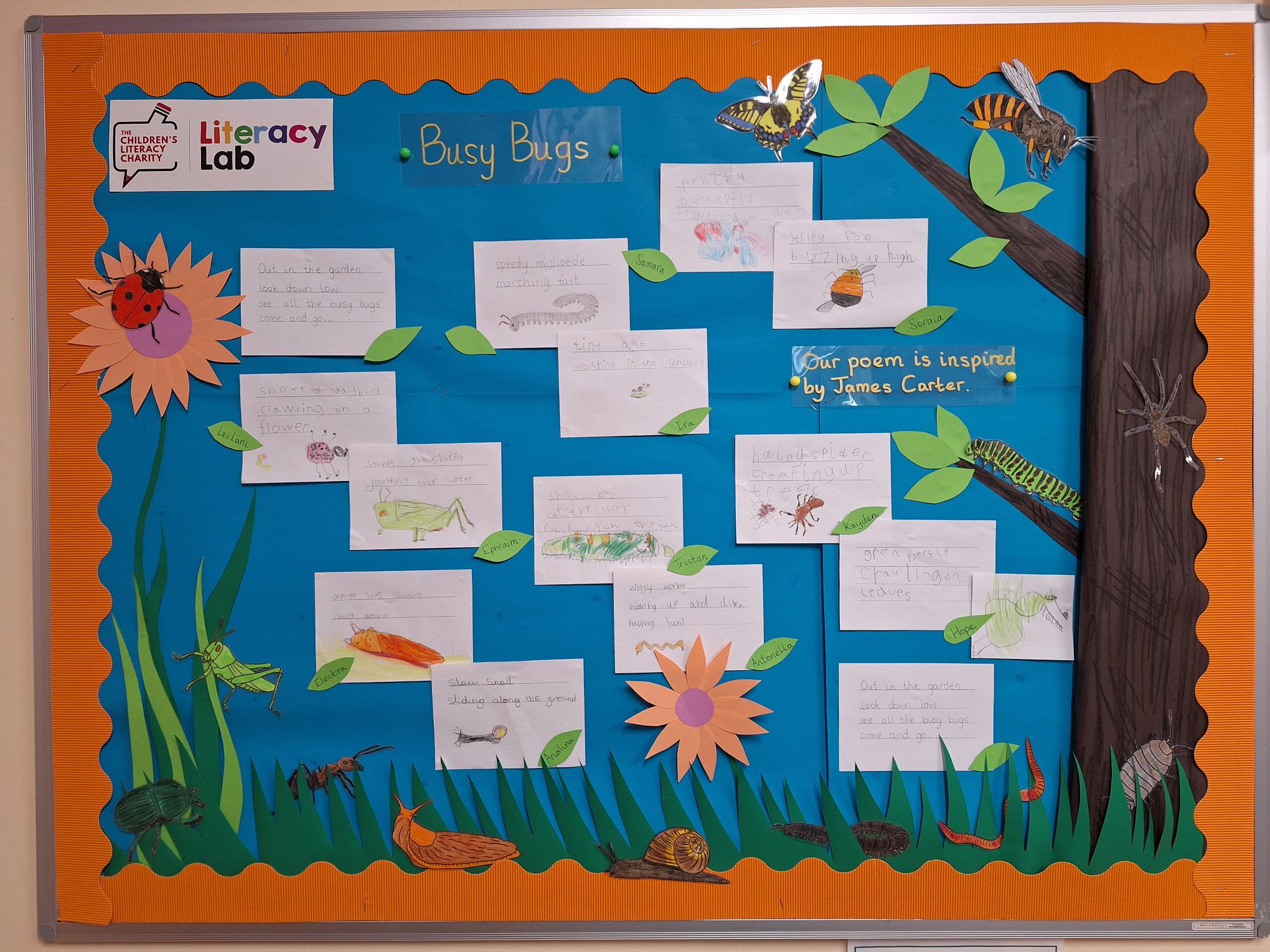
St Marks is a one-form entry, Church of England foundation school in the London Borough of Lambeth. Sola Ingram has been Head for 11 years and is a long-time supporter of our Literacy Lab programme and more recently of both Reading Lab and the new Story Lab trial.
As part of our spotlight series, we interviewed him about the school, his priorities and why his investment in all three of our programmes represents such good value.
Tell me about what makes St Mark’s special?

I think what serves us well is that we are a faith school with a very strong community feel and both pupils and parents have a real sense of belonging.
As well as supporting a very diverse community, over 50% of our pupils receive Pupil Premium; around 70% have English as an Additional Language and more than 20% have Special Educational need
In all those areas, we’re higher than national averages but we achieve outcomes which are broadly in line with national expectations and that is because we work really hard to go above and beyond. So for instance at the end of Key Stage 2, disadvantaged children here achieve higher than national attainment levels.
What challenges do you see ahead for the school, its pupils and the wider education world?
There are plenty of challenges ahead but over my 30 years as a professional teacher I’ve seen a lot of change, new initiatives, shifting priorities and in general I take a let’s see how this works out approach. I’m not resting on my laurels but we’re confident in what we do; we offer a strong curriculum; we are a popular school and the outcomes are good so our focus is to do more of what we currently do because it works.
So for instance with the recent SEN announcements, broadly it all makes sense but we do need greater clarity and this will come, with time. If I looked at all the criteria, I would say some 28% of pupils here have one form of special need or another but many can access the curriculum and they will achieve good outcomes.
Is there an element of over diagnosis – yes; but there is also under diagnosis so we have to be able to focus on the children who need the most help and also keep it under regular review. Children’s needs change and we should adapt to support the children as best we can.
Demographic Changes:
Falling roll, school closures or mergers is, of course, a big issue but there are other factors at play such as working from home trends and the availability of suitable accommodation so like many things, it is perhaps more nuanced than the general picture being painted.
Recruiting Quality Staff:
Ironically given the school closures, one of the biggest challenges we face is recruitment. We find the quality is not always there or if it is, working in a challenging, inner-city school doesn’t appeal. Not everyone has the necessary skills to do this job and if I am to maintain our high standards, I need both quality and adaptability.
The digital world:
Most of the issues we have within the school are connected to social media. We see this particularly among the older children here and the saddest thing is the impact it is having on resilience. I was discussing this with our PE coach and children don’t get out, they lack physical awareness and they are losing the ability to play so we are focused on being an active, dynamic school and consciously keeping the children active.
If I then look ahead, as our children move on to secondary school, I see how social media creates this pressure to conform and bullying if you do not. However, we have to prepare children to deal with this and seek positive ways to engage in AI more.
Unfortunately, it is not just children using social media and AI inappropriately. I was with a group of Head Teachers recently and the consensus was that managing the flood of emails being received from parents using AI to generate letters of complaint, is taking up huge amounts of time and causing considerable stress. It is a real issue which needs addressing.
Tell me more about why you continue to invest in our programmes?
Quite simply, what you do works. We can see the impact and the very high quality of your tutors is what makes the difference. That and your accountability measures: I like what you do, how you baseline assess and then measure progress so we can see that the outcomes are strong. We also have a very positive, collaborative relationship and your tutors provide good, ongoing feedback to the teachers. It’s not something that’s done with the children and then no one has a clue what is going on.
Any external intervention takes school time to manage. For it to work well you have to be invested in the process but if you put the time in and the outcomes aren’t strong, what is the point? We have worked with other tutoring interventions but to be honest, nothing comes close to the impact of your work.
How do you prioritise what you look for in an intervention?
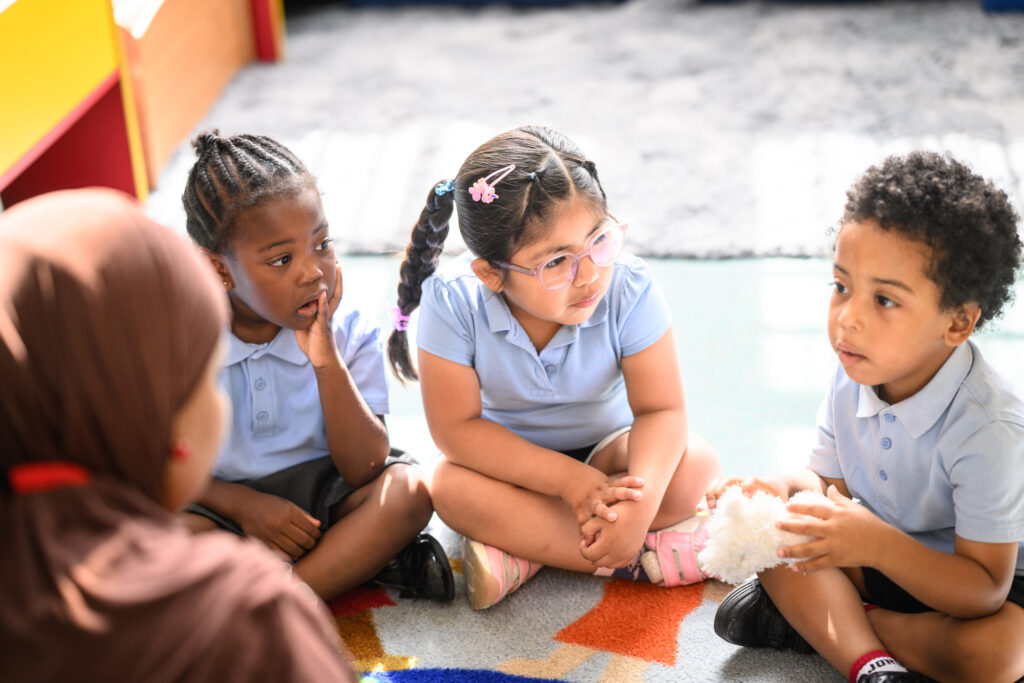
We look at the whole picture: confidence, engagement and enjoyment and we like to get feedback from the children themselves. We can see that what they’re able to produce in Literacy Lab exceeds what they are able to do in the classroom. I think the children are able to do their best because of the rapport with the tutor and the calm, small group Lab environment with no distractions and 100% focus. The other thing your tutors do very well is celebrate success, both with a child and through giving feedback to the parents. The children have always got a sense that they are doing well, improving, and the children are proud of their achievements, very proud indeed.
We know some schools prefer to keep children in the classroom as they don’t like them missing lessons, how would you respond to that?
I get it; mornings in particular are prime learning times. However, for a child who is struggling in the classroom, if that they are benefitting from a quality, high impact intervention, that more than compensates for what they’ve missed. And because your tutors rotate the timetable, the children don’t miss the same lessons and that works for us.
Last but not least: how do you budget for our interventions?
Well the cost of your programmes comes out of our Pupil Premium: that money is to support these children so that is how I spend it. For the outcomes the CLC deliver, your programmes are very cost effective, compared for instance to the cost of hiring a dedicated teacher to deliver one to one or small group support. We review constantly and time and time again, we feel the CLC interventions are invaluable, not just because the children attending make strong, evidenced progress but also because in acquiring literacy skills in the way they do with your tutors, the children grow in self-esteem and motivation, able to engage with learning, right across the curriculum.