
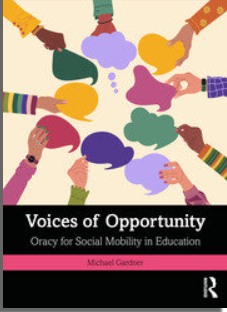
Voices of Opportunity: Oracy for Social Mobility in Education
We were delighted that our Education Lead, Julie Taylor, was invited to contribute to Michael Gardner’s recent book, Voices of Opportunity: Oracy for Social Mobility in Education.
The book brings together leading voices from across education to explore the vital role that oracy plays in improving outcomes for children and tackling educational disadvantage. In her chapter, Julie reflects on The Children’s Literacy Charity’s work supporting children who have fallen behind in literacy and highlights the importance of developing the oral language skills that underpin reading, writing and learning. Drawing on the charity’s evidence-informed interventions, she demonstrates how targeted support can help close the oracy gap by building vocabulary, confidence and self-expression
These themes were further explored when Julie attended the recent roundtable discussion, presented by Michael Gardner, Oracy – The Engine of Learning, alongside educators, school leaders and practitioners. The discussion reinforced many of the key messages from Voices of Opportunity: that oracy is not an optional extra, but a fundamental entitlement for every child, underpinning academic success, wellbeing and social mobility. Oracy has the potential to be a powerful vehicle for social change, but only if it is embedded with equity, expertise and long-term commitment at every level of the school.
Together, the book and the roundtable highlighted the importance of ensuring that every child has the opportunity to develop their voice and to be heard.
Julie also reflected on her time on the Steering Committee for The Literacy Link. Literacy organisations from across the sector recently came together at the British Library for the second Literacy Link Annual Gathering, as highlighted in her recent piece for the Fairer Education Alliance website.
Teresa Cremin OBE delivered the keynote lecture, and as Julie wites
“Crucially, Teresa reaffirmed the transformative power of reading – not only as the foundation of literacy attainment, but as a driver of wider curriculum success, personal agency, and wellbeing. Her message carried both inspiration and urgency: fostering deep engagement with reading is central to educational equity. In this context, every organisation in the room, regardless of its specific focus, is part of a collective effort that extends beyond individual aims, contributing to the wider pursuit of social justice through literacy.”