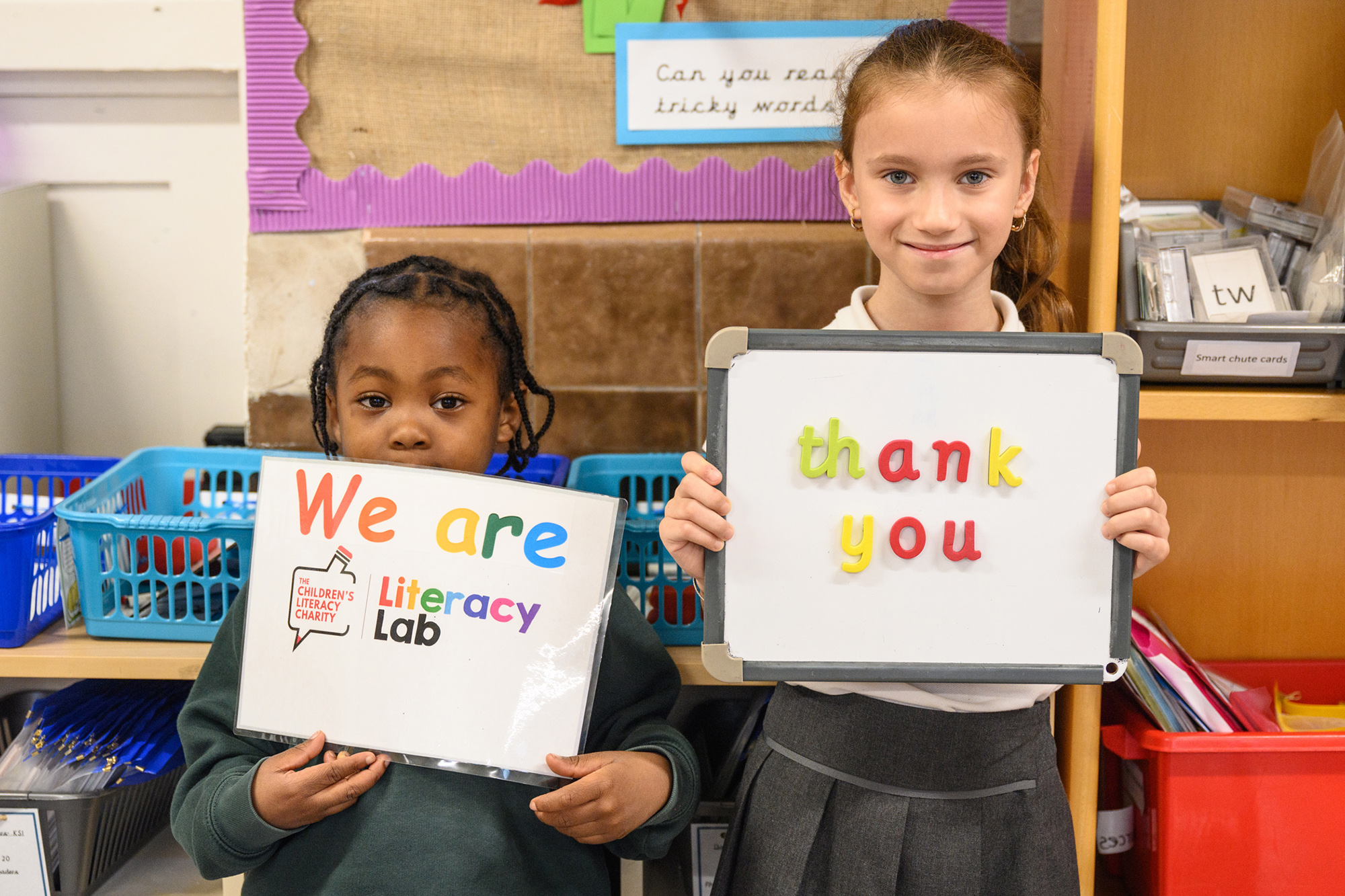
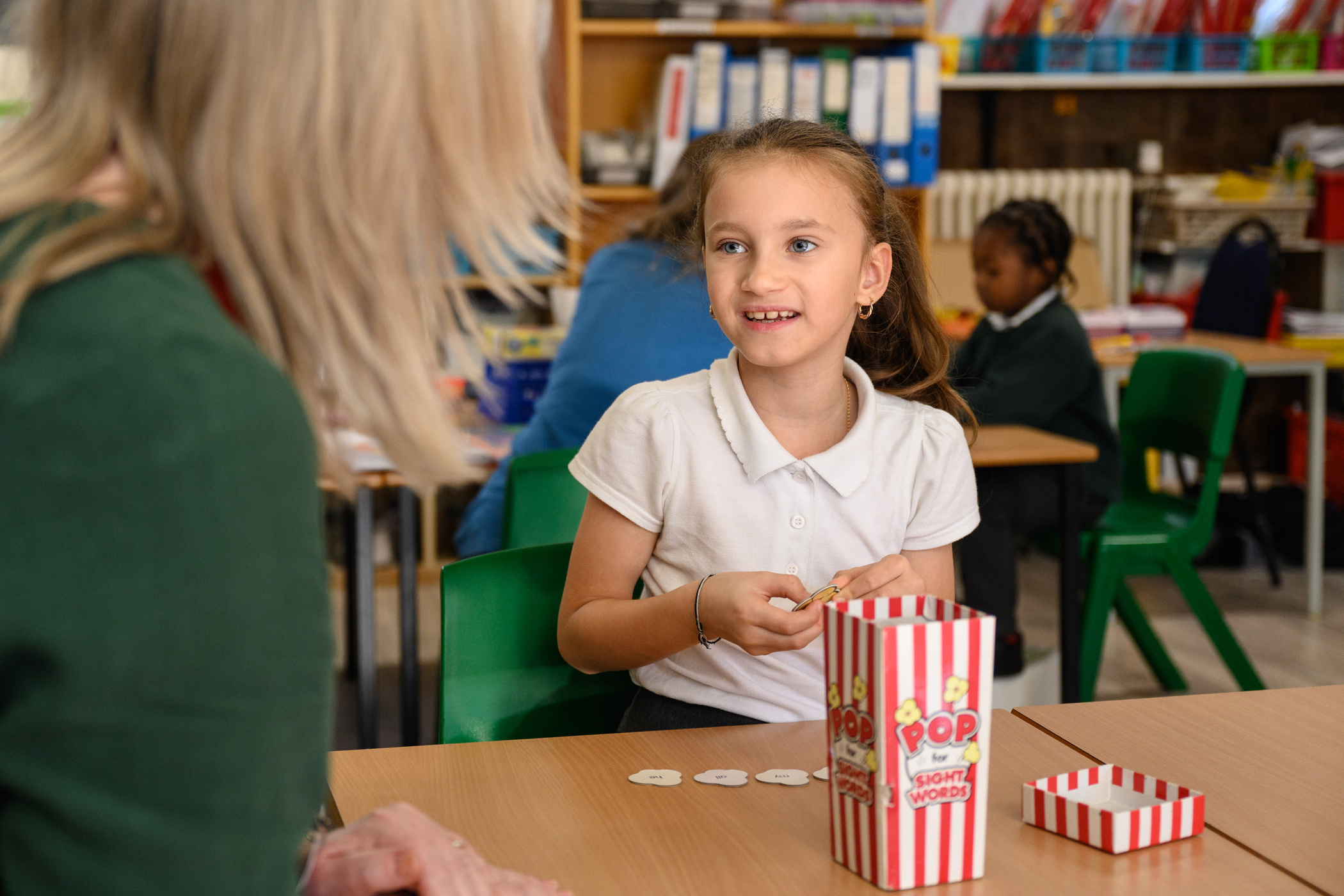
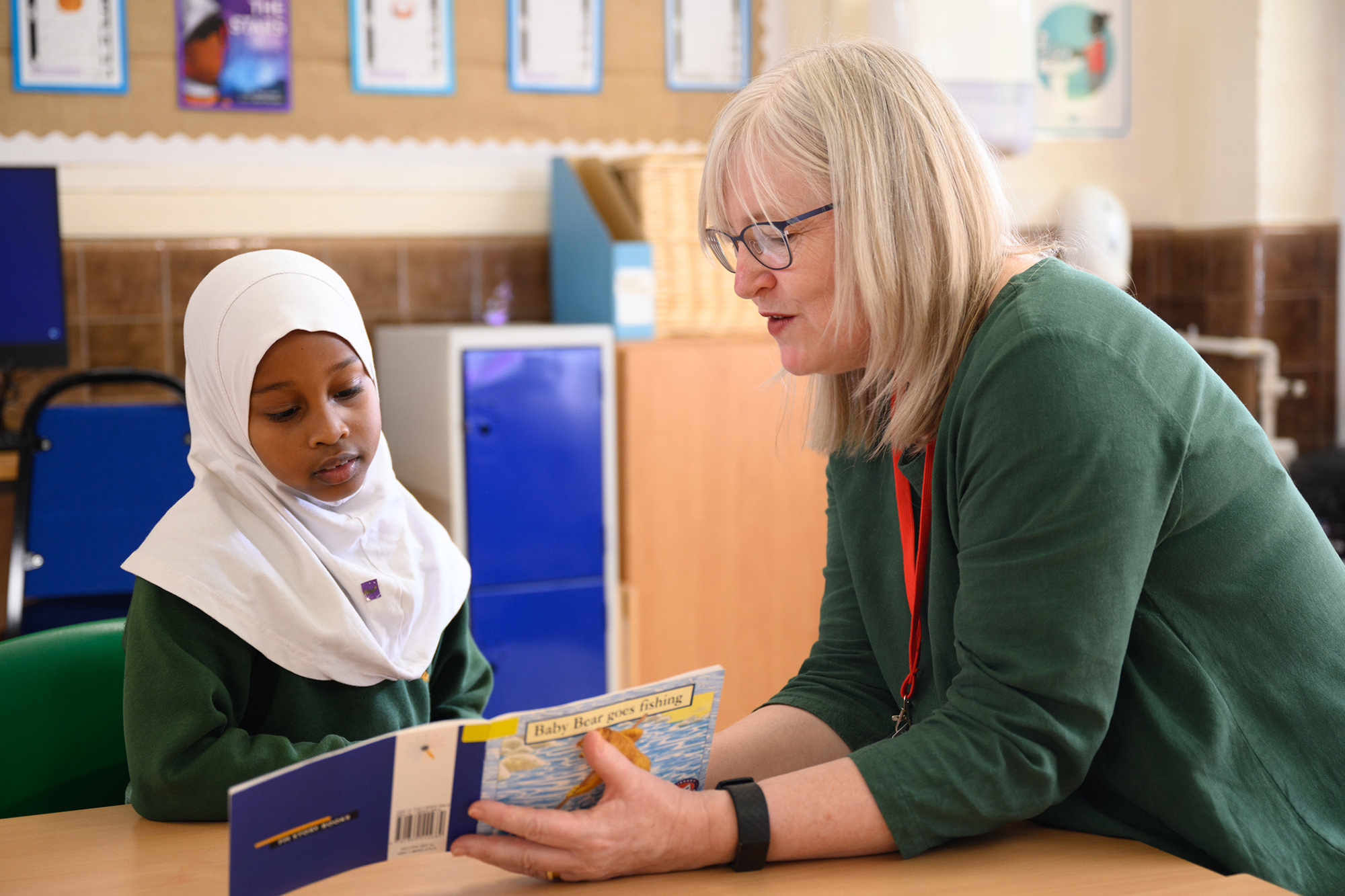
We are delighted to announce that The Children’s Literacy Charity is one of seven not-for-profit organisations chosen by The Mercers’ Company to receive significant funding as part of their Young People and Education Programme’s Early Years Special Initiative.
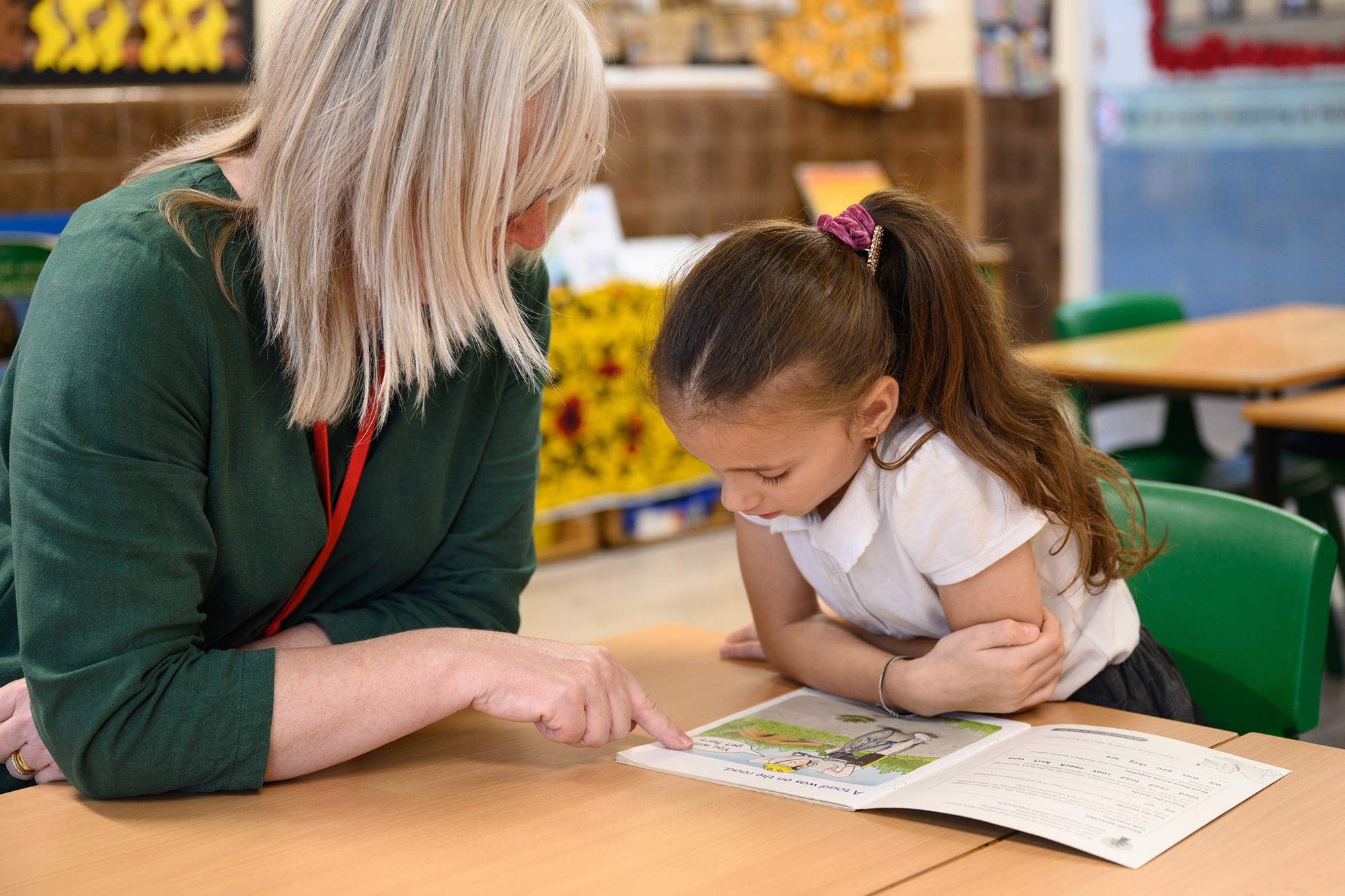
Building on our belief in early intervention, our project will develop a new specialist language and communication intervention for nursery and reception children who have poor language skills. As well as equipping them with the literacy building blocks, the programme will help ready children for the effective acquisition of phonics and support their social and emotional development.
Julie Taylor, the charity’s Education Lead, said: “Through our Literacy Lab work we see children increasingly arriving at school with very poor language skills and struggling with attention, concentration and listening”.
Recent research shows that children from a disadvantaged background start reception nearly five months behind children from higher-income backgrounds and language development suffers if there is an absence of talk and interaction at home or limited availability of engagement with books.
“Our Early Years project will use specially trained tutors to deliver a structured programme designed to improve language and communication skills for the children who need the most help engaging them with the magical world of books and helping them develop a lifelong love of reading.”
The Children’s Literacy Charity Trustee Jenny Thomson, Professor of Language and Literacy, University of Sheffield, commented:
“We know that strong speech and language around the time of school entry is critical to a child’s literacy trajectory and we also increasingly know that developing an intrinsic motivation to read is what will sustain progress over time, and is a key limiting factor for a lot of children and young people. In targeting early intervention AND interest in reading, I feel confident this project’s evidence informed approach will deliver powerful outcomes and have a significant impact on a child’s future literacy potential”.
CEO Isabel Greenwood added: “Early intervention was a founding ethos for this charity and building on the knowledge and expertise gained through our existing literacy programmes, we believe our Early Years project could make a significant contribution to developing literacy skills and closing the attainment gap as soon as possible”.
“We are looking forward to working closely with Early Years practitioners in our partner schools and working collaboratively with the team at The Mercers’ Company and with our fellow grantees.”
The Children’s Literacy Charity is part of the second cohort in the second phase of The Mercers’ Company Early Years Special Initiative and each organisation will receive grants of up to £300,000 over a four-year period through The Charity of Sir Richard Whittington for which the Mercers Company is Corporate Trustee.
The other grantees in this cohort are: Auditory Verbal UK; Chickenshed; Discover Children’s Story Centre; Home-Start London; National Literacy Trust and Peeple.
Providing an enriching language and literacy experience is a crucial element if children are to develop as independent and motivated readers. In this blog our Education Lead, Julie Taylor explains that for children struggling with reading, context and comprehension and reading enjoyment are as important as the process of decoding.
However, for children coming from disadvantaged backgrounds, providing them with an enriching language and literacy experience is a crucial element if they are to develop as independent and motivated readers. For children struggling with reading, context and comprehension and reading enjoyment are as important as the process of decoding.
It is this holistic approach to the acquisition of reading skills that is highlighted in an excellent new book: The Balancing Act: An Evidence-Based Approach to teaching Phonics, Reading, Writingby Charlotte Hacking (Centre for Literacy in Primary Education) and Dominic Wyse (Professor of Early Childhood and Primary Education, UCL). We have long admired the work of the CLPE and regard their resources as integral to the reading process.
As soon as children enter the Reception doors, the daily phonics lesson is now an established and predictable part of their routine.
Yet while last year’s PIRL (Progress in International Reading Literacy) Study showed that our children are now the ‘best readers in the western world’, DfE data for 2023 indicates that over a fifth (21%) of children did not meet the expected standard in the phonics screening test at the end of Key Stage One and nearly a third (32%) of children did not meet the expected standard in reading. The PIRL data also reveals that England is 42nd out of 65 countries in terms of reading motivation. It is this statistic which should concentrate minds on the need to take a more holistic approach to the acquisition of literacy skills.
As a specialist literacy intervention, we understand only too well the importance of effective phonics instruction in teaching pupils the relationship between sounds and the letters that represent those sounds and to understand the alphabetic principle.
It is not up for debate that phonics is a crucial component of reading instruction but it is not the only approach, nor is it universally the best way for every learner. Different children have different learning styles and needs, so a more holistic approach that includes phonics instruction alongside other wider word recognition strategies such as whole language, sight words, context clues, and comprehension skills is important.
Teaching the key reading skills using the formulaic, phonetically decodable books will of course provide opportunities to practice a child’s knowledge of sounds but we must not forget the role real books can play in providing context and contributing to comprehension.
For our youngest children, daily immersion in ‘real’ books, alongside phonics instruction, not only provides opportunities for children to read, apply their phonics skills and decode but also helps to develop comprehension and a love of books which will cement the foundations of a lifelong love of reading. As teachers, we have a responsibility to ensure that children develop the knowledge and skills to read with increased fluency which will lead to a greater depth of comprehension which in turn will increase reading motivation.
The approach taken in ‘The Balancing Act’ focuses on using high quality children’s texts to teach the key elements that are vital to learn to read and write, including phonics.
As the authors rightly argue: “With this approach, the importance of comprehending and composing the meaning of written language is carefully balanced with the acquisition of a range of skills and knowledge. This enables pupils to see the real purposes for reading and writing.”
“Meaning drives our approach to teaching reading and writing. It is the essence of human language, hence it should be the essence of teaching. Teaching about sounds is meaningless unless it is contextualized in words, sentences and whole texts.”
In both our Literacy and Reading Labs we take just such a balanced approach to the acquisition of literacy skills. Reading fluency is an essential component of our sessions: children learn and practice phonics and apply their skills in all contexts. Using a variety of techniques, children are taught how to make reading more meaningful and enjoyable and an exposure to high quality, diverse texts provides the engagement that will lead to under served children acquiring the literacy skills essential to be able to engage right across the curriculum.
Over our many years of experience in supporting children who are significantly behind in their reading, it is the both the depth of our phonics tuition combined with the richness of our language and literacy environment which makes a difference, enabling us to close the literacy gap and broaden horizons.
What is so special about a bedtime story? In this latest blog, our Education Lead, Julie Taylor discusses why reading to a child at bedtime can help children through those early years of primary school, fostering not only the joy of reading but building those essential early literacy skills.
“The routine of reading at bedtime offers a slow wind-down at the end of a busy day. It creates a reading environment that allows both adult and child those precious moments to get cosy and slip into the magical world of books. Shared reading is not only fun, it is also a wholly worthwhile activity reaping great reward as a child travels through those formative years. An investment of a few minutes a day has the power to create a lifelong love of books and reading.
Reading aloud to children is the first key stage in their journey to becoming independent readers.
For children, listening to simple stories with patterns and rhymes prepares them for the words that they eventually meet in print, and for the music of language. These simple stories help develop a knowledge of how texts are constructed so that they can begin to invent and build their own stories as they grow. Reading aloud to children is the first key stage in their journey to becoming independent readers.
Discovering the joy of books at an early age has numerous benefits that parents may not have considered. Sharing a bedtime book is undoubtedly a bonding time but it is also building those firm foundations of literacy. Not only do books stimulate and empower a child’s imagination, they also improve language and listening skills, facilitating important conversations that develop vocabulary, thinking skills and encourage children to offer their opinion. They learn to question, to predict, to hypothesise, to explain and describe: all language skills they will use across the curriculum as they grow.
Reading a bedtime story to a child offers comfort and reassurance. It is relaxing and soothing, providing the security that a young child needs in a nurturing and safe environment. An adult’s time and attention that a bedtime story demands is a priceless gift to a young child, providing that calming rhythm and pace that a child needs at the end of the day. Delivering that bedtime story tells our children that they matter. It is not only our time and energy that is so precious to them but their immersion into books which plays such a great part in the development of their literacy skills.
Research suggests that just twenty minutes of reading to your child each day contributes to an improved performance in school.
Even for those parents and carers who have their own challenges with reading, perhaps dyslexia or English is not their first language, there are still so many opportunities on the page. Discuss the pictures in your home language, tell the story using your own words, discuss with your child. A bedtime story is so much more than reading a story, it’s an activity that everyone can share and enjoy.
Research suggests that just twenty minutes of reading to your child each day contributes to an improved performance in school. As children hear the words and comprehend the stories and illustrations, vital connections in the brain are made. When stimulated these connections form the basis of their future learning and intellectual engagement. Regular reading will also help to improve a child’s ability to sustain longer periods of concentration, improve their sleeping patterns and develop greater self-esteem. Books provide an understanding of the world, develop empathy and activate a child’s imagination, propelling them through those early years of primary school, fostering not only the joy of reading but building those essential early literacy skills.”
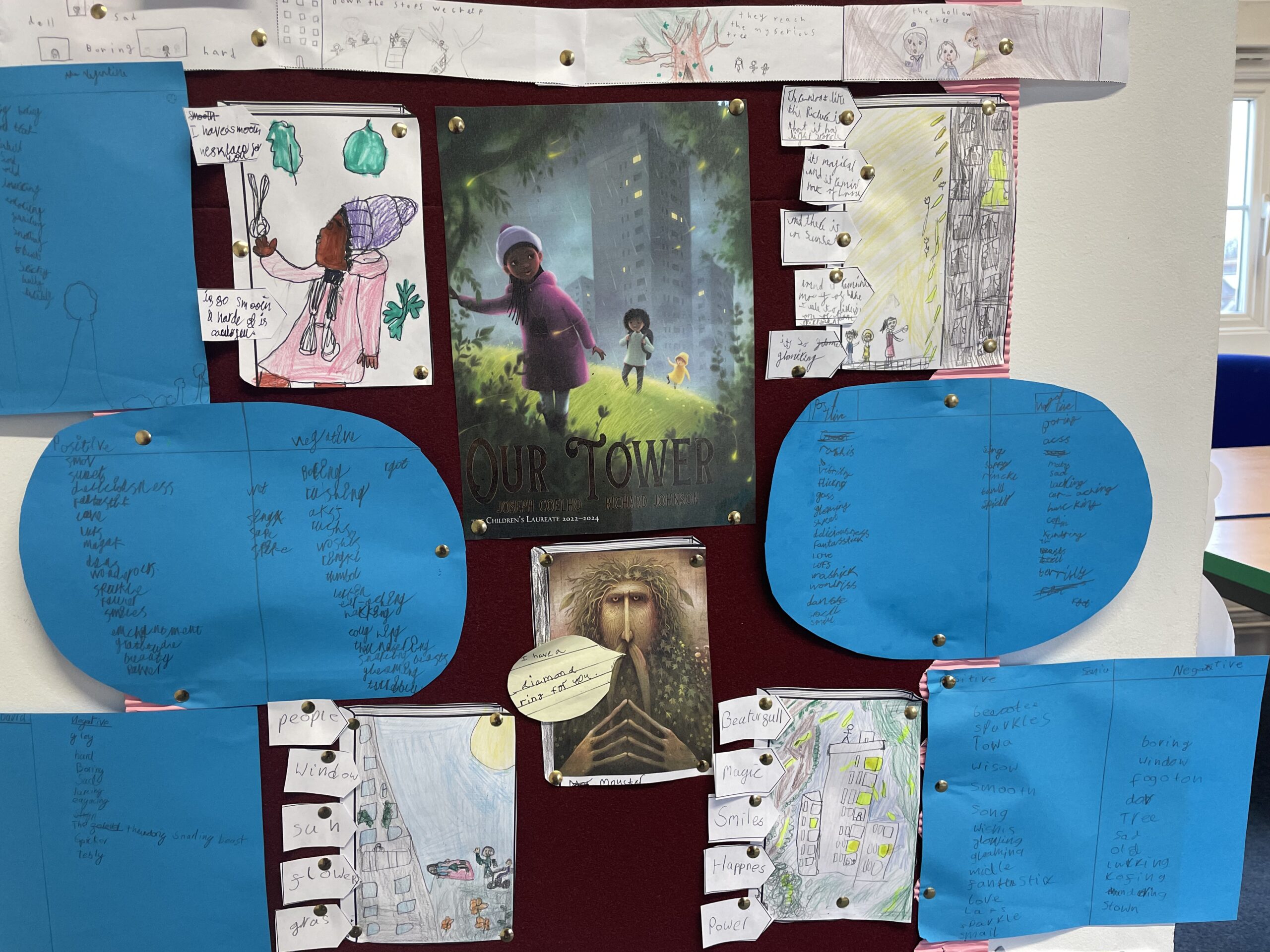
The Children’s Laureate, Joseph Coelho has recorded a special video message for our Literacy Lab pupils in recognition of their amazing work inspired by the book Our Tower.
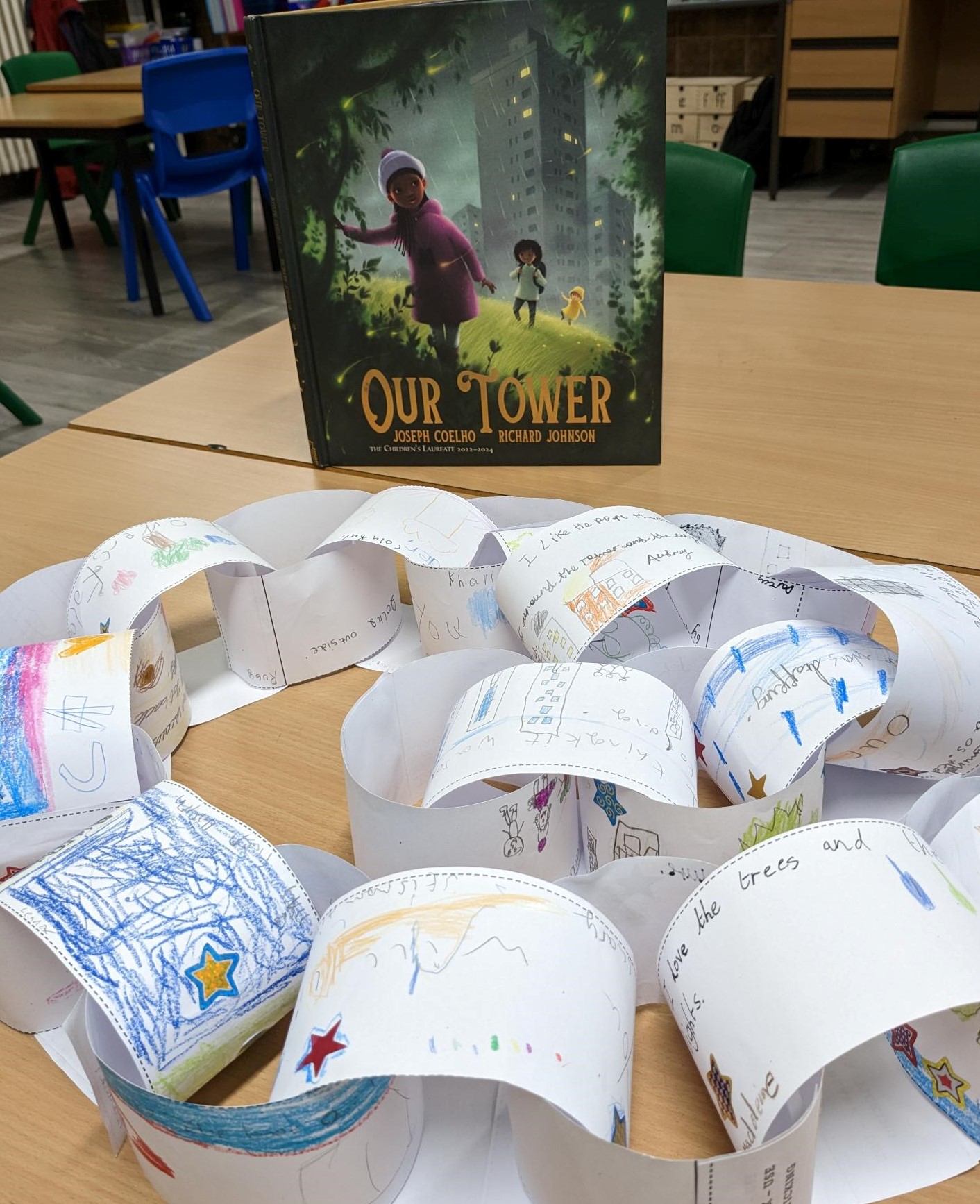
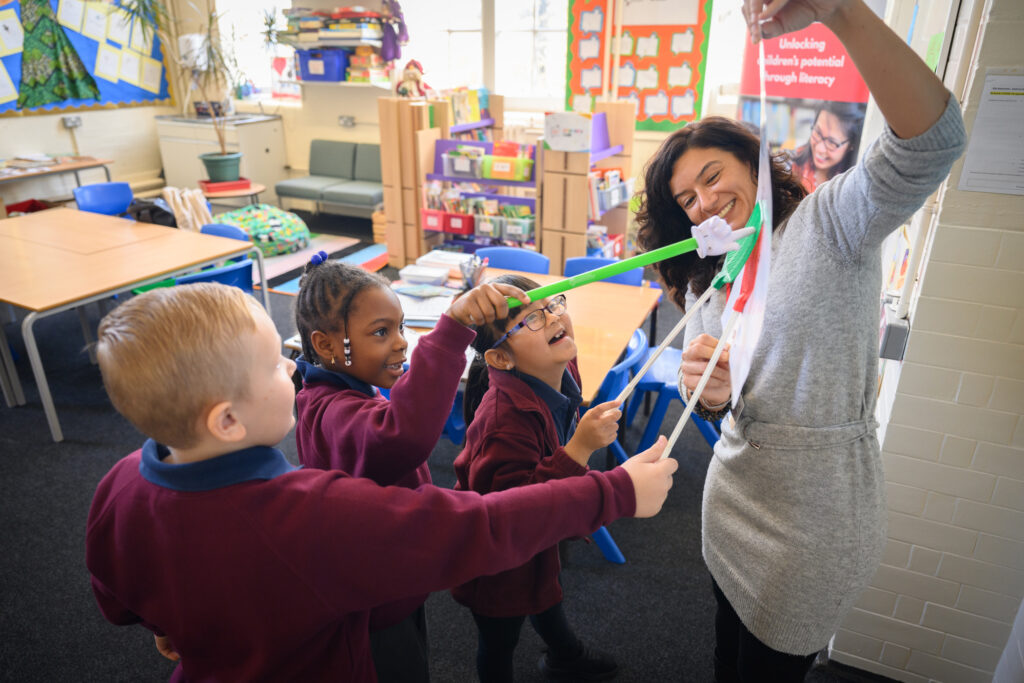
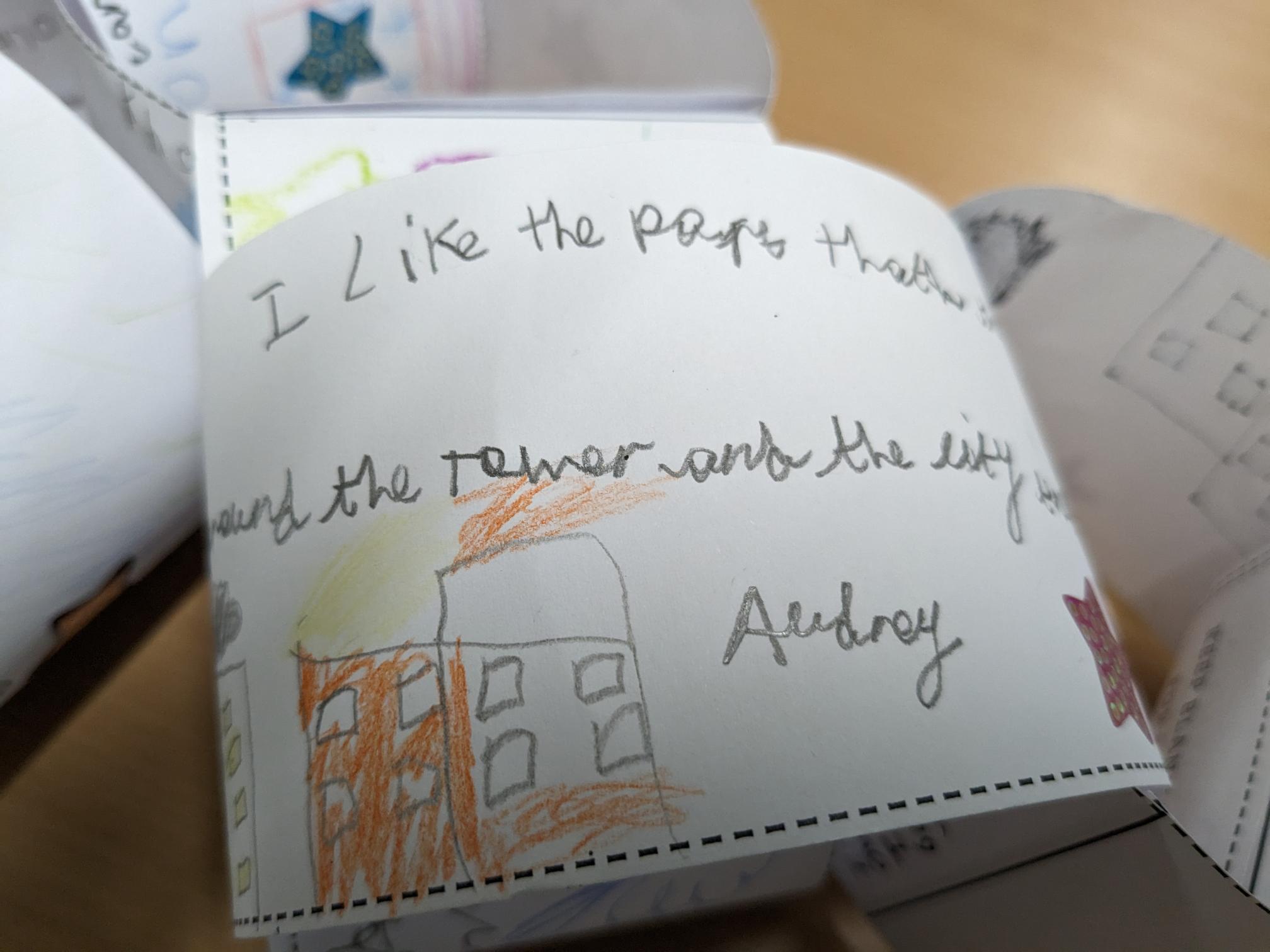
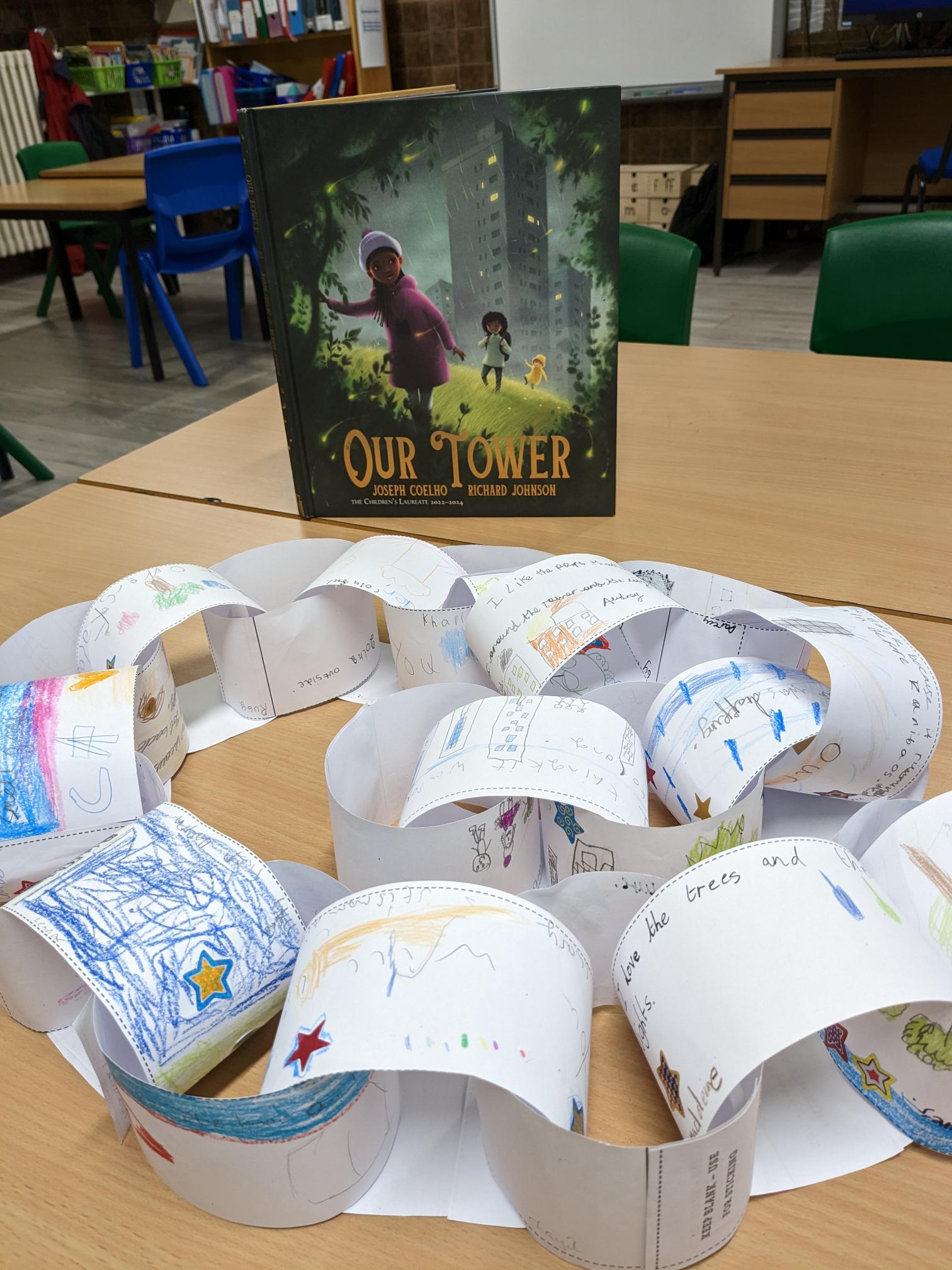
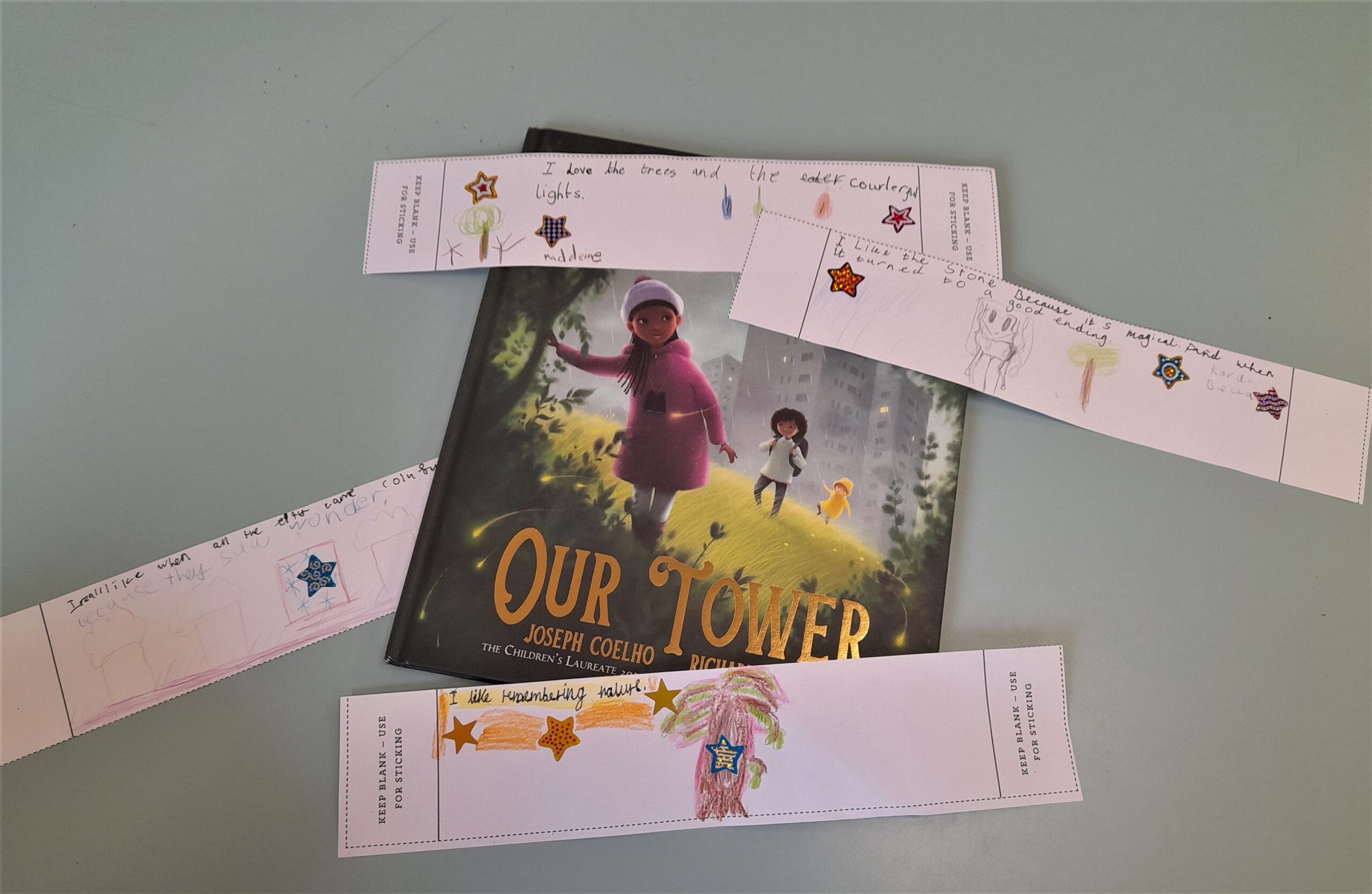
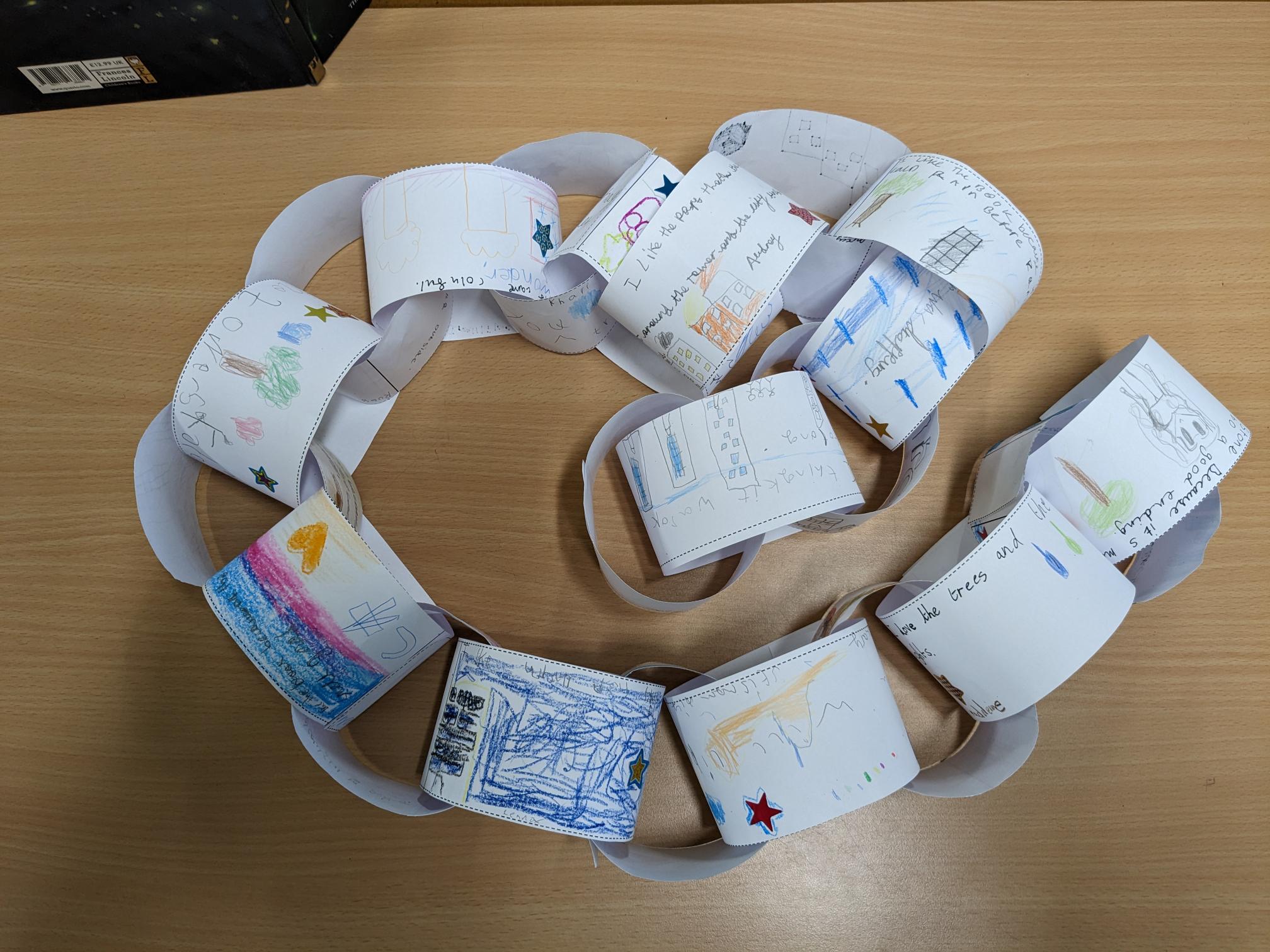
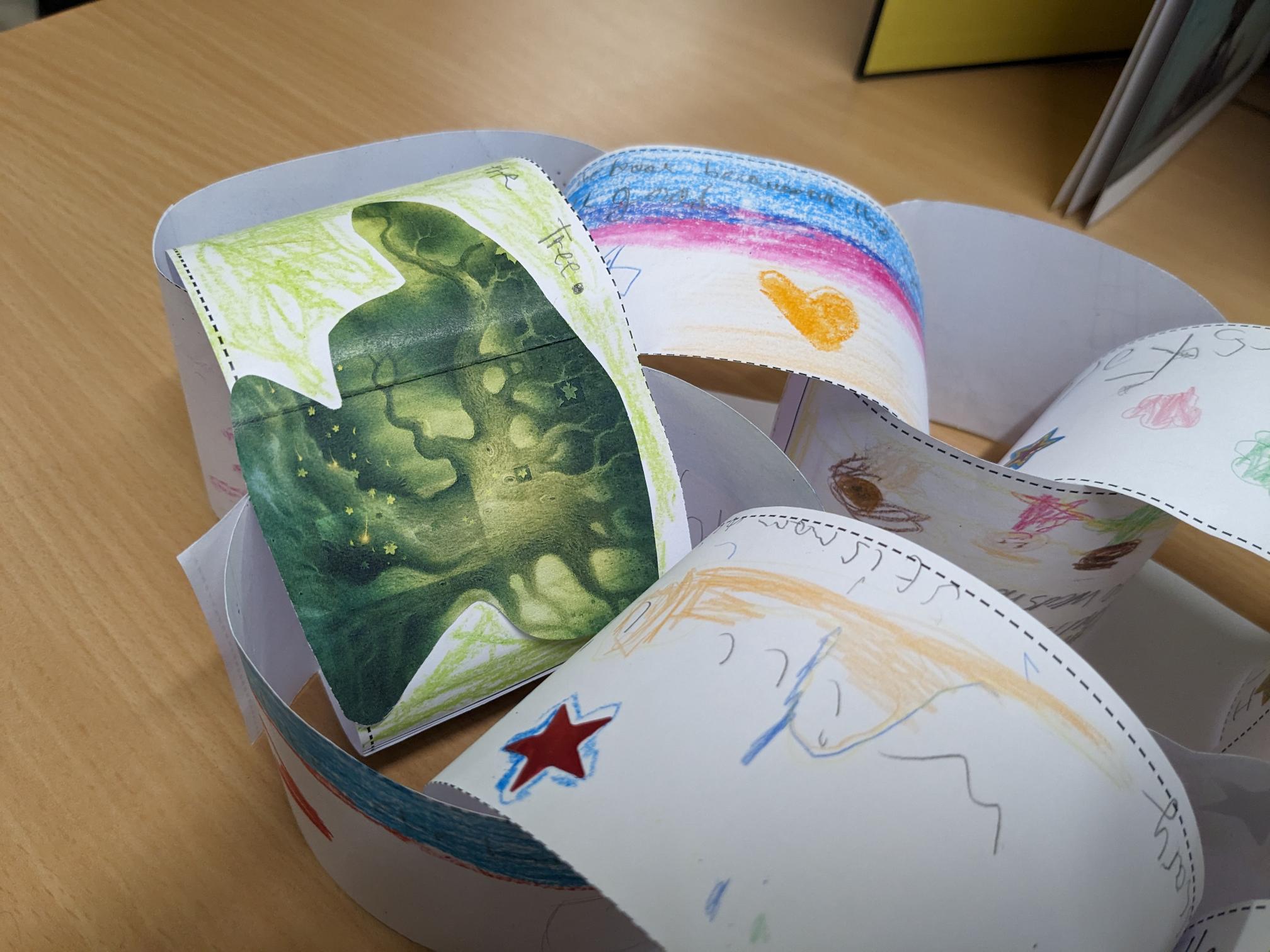
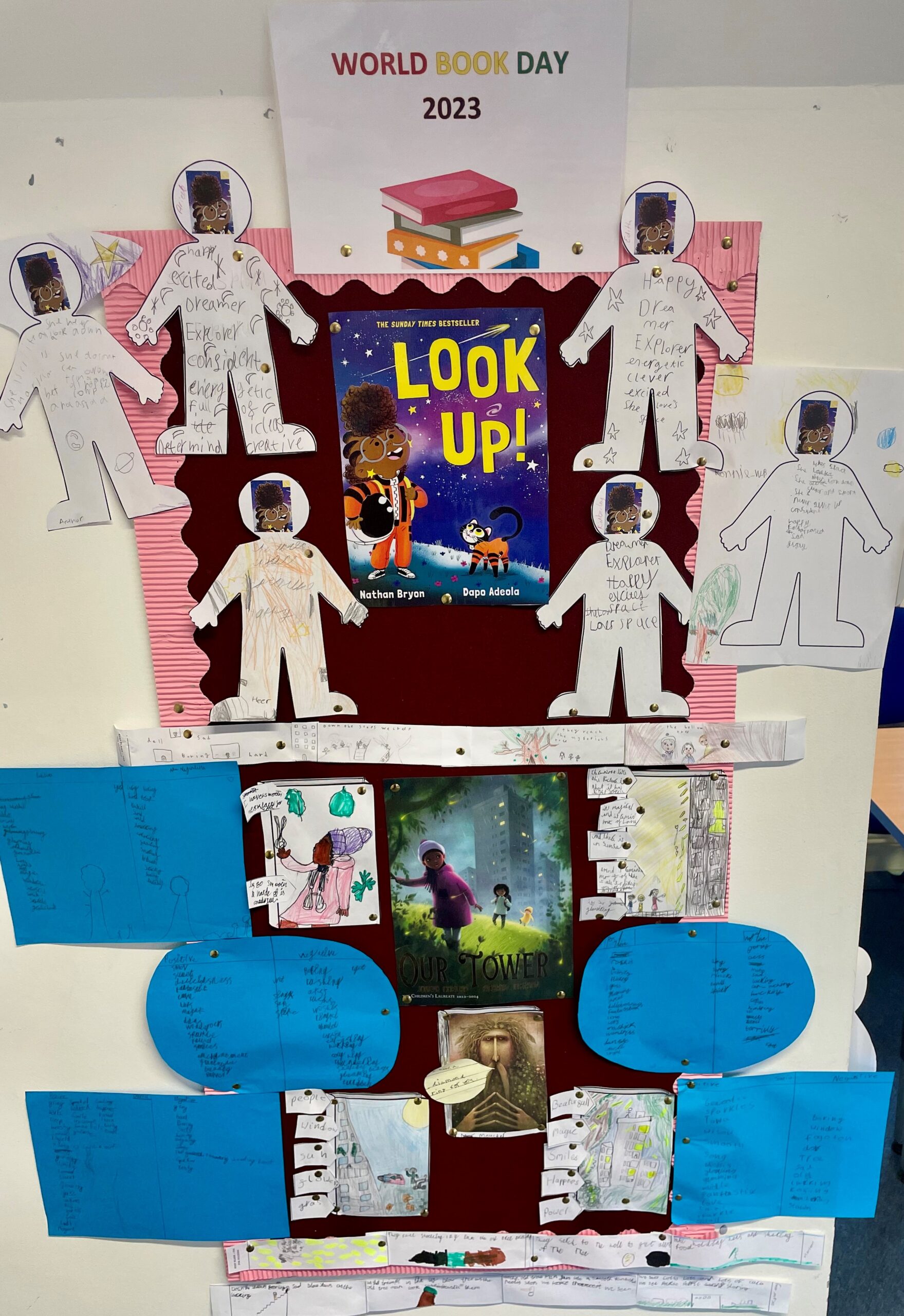
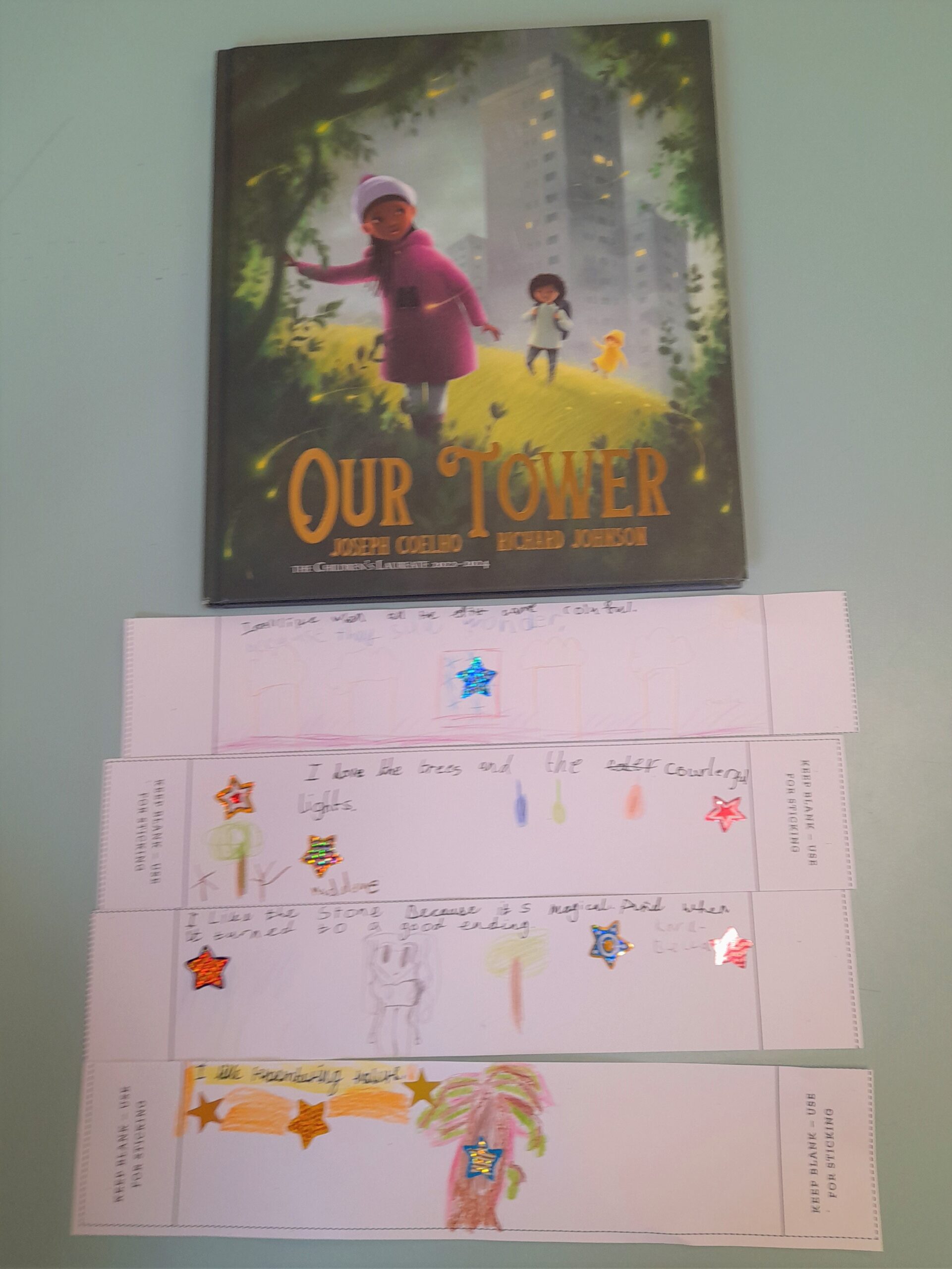
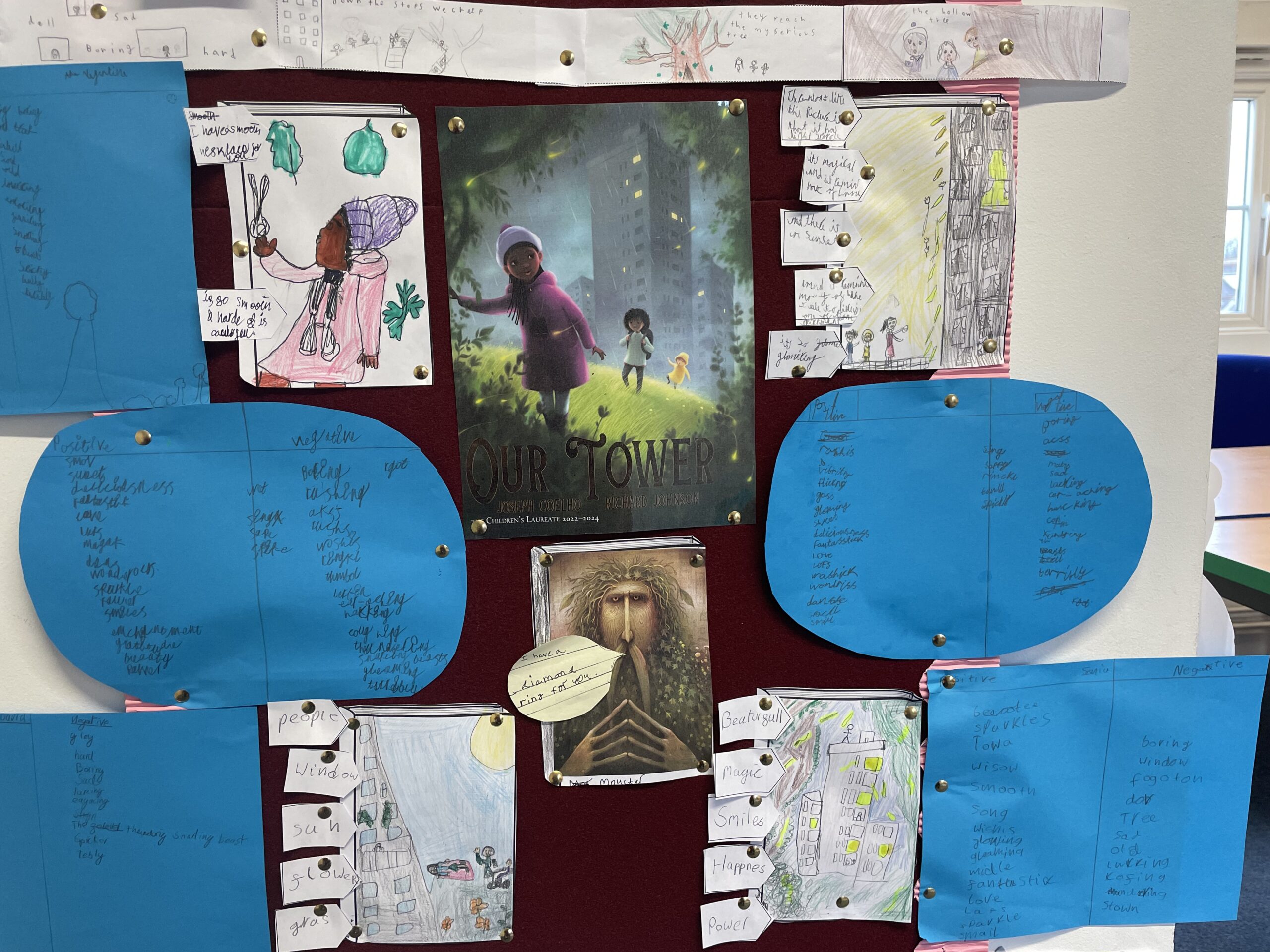
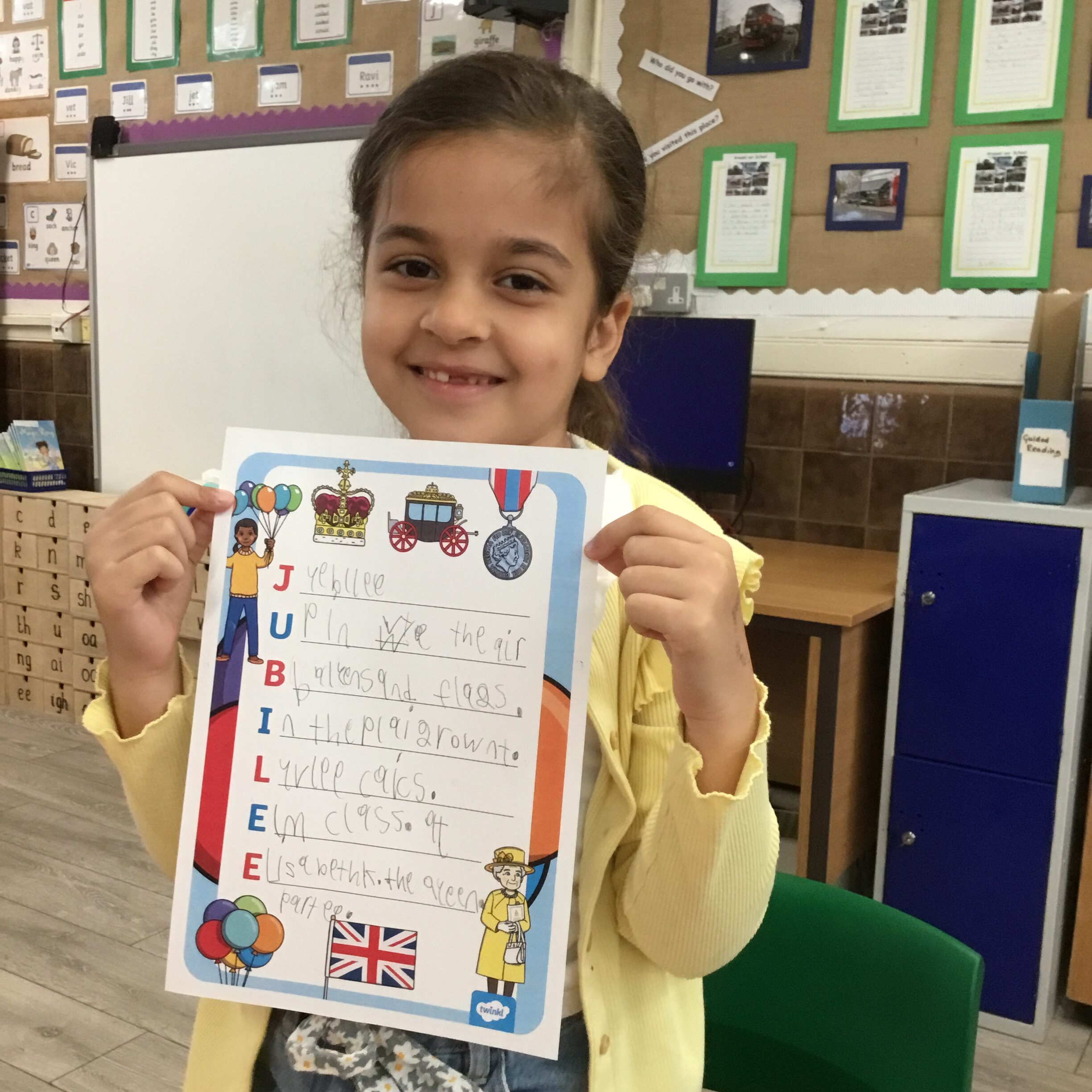
This year Literacy Lab pupils enjoyed reading the book Our Tower and created their own work inspired by the story. Written by Joseph Coelho and wonderfully illustrated by Richard Johnson, our tutors enjoyed sharing the book with the children and introduced a variety of activities including character profiles and descriptions inspired by the story.They explored positive and negative vocabulary and drew maps and their own designs of a tree-grown man character depicted in the book. Children also created wonderful literacy paperchains, linking elements of the story together.
We were all so excited to receive this special video message. Thank you Joseph Coelho!
In this blog, our Education Lead, Julie Taylor discusses why for disadvantaged children, phonics teaching alone is not always enough to produce confident and resilient readers.
Phonics is a subject that has attracted some considerable debate over the years and since the PIRL (Progress in International Reading Literacy) Study was published a few weeks ago, there has been much comment on the effectiveness of phonics in teaching children to read.
While it is, of course, excellent news that England is number four in the world for children’s reading, the fact that the country has maintained its high PIRL score in spite of the pandemic is also a testament to the dedication and quality of teachers and schools throughout this difficult time.
Phonics teaching alone is not always enough to produce confident, resilient readers.
As a specialist children’s literacy charity we have long supported the use of phonics but in our experience of working with disadvantaged children we know that phonics teaching alone is not always enough to produce confident, resilient readers who are able to engage effectively in the classroom and across the curriculum. We firmly believe that reading fluency, comprehension, oracy and reading for pleasure are equally important in giving disadvantaged children a vital step up.
Yet when you delve into the detail, the PIRL study showed that only 29 percent of pupils said they enjoyed reading, putting England 42nd out of 57 countries. It is this finding that should be a cause for concern.
In 2022 the attainment gap in education was at its widest level for a decade.
As long ago as 2002, The OCED (Organisation for Economic Co-operation and Development) said that “reading enjoyment is more important for children’s educational success than their family’s socio-economic status”. Clark and Rumbold (2006) argue that reading for pleasure could be one important way to help combat social exclusion and raise educational standards.
However, according to the Centre for Social Justice (CSJ) in 2022 the attainment gap in education – that between the poorest and most advantaged – was at its widest level for a decade.
The CSJ report, published in February this year, found that in 2022, 41% of year 6 pupils in England left primary school without meeting the expected standards in literacy and maths – 275,000 11-year-olds. That is 50,000 more than in 2019.
The picture for disadvantaged children is even starker: the majority (57 per cent) of children from disadvantaged backgrounds left primary school without reaching the expected literacy or maths standards – a significant increase on the pre-pandemic figure of 44 percent.
So what is to be done? The importance of specialist intervention.
Fostering a love of reading is essential for all children but particularly for disadvantaged children as this will help to embed reading for life and support children in accessing the wider curriculum – poor numeracy can often be a function of poor literacy.
Given the Government goal of improving literacy (and numeracy) to narrow the attainment gap and improve outcomes for the most disadvantaged in society, we believe specialist literacy tutoring to be a powerful solution for closing the literacy gap in primary school children.
All the evidence shows that early, tailored, one-to-one or small group intervention is highly effective, particularly at primary level and especially when supported by work to engage parents in their child’s acquisition of literacy skills.
Our skilled tutors foster a love of reading and use their adaptive teaching knowledge to meet the need of the child.
We have long argued that even in the best schools, with great teachers, some disadvantaged children struggle to make progress in the mainstream classroom. For these children, time with a specialist tutor such as those employed by us in our Literacy and Reading Labs can make a real difference.
Our skilled tutors foster a love of reading and use their adaptive teaching knowledge to meet the need of the child, recognising that for some children phonics can only achieve so much.
In our Labs children benefit from the consistent, nurturing support of a highly trained, employed tutor. Pupils ‘graduate’ having grown in confidence, self-esteem and resilience. Schools often comment that it is this feature of our work that adds the greatest value.
In one month of our Literacy Lab tuition, children make 4.9 months of progress.
In 2021/22 our Literacy Labs worked with disadvantaged children who were on average 15 months behind where they should be with their reading. We are, therefore, supporting the children who are the most behind and are at greatest risk of being left behind.
In one month of our Literacy Lab tuition – where we build on phonics to develop comprehension, writing, listening and speaking skills – children make 4.9 months of progress.
We also work closely with schools to engage parents in our work. The PIRL researchers found that parents and families make an important contribution to a child’s literacy journey – a view strongly supported by the CSJ report too.
Our fear though is that with ever increasing pressure on budgets, schools will be unable to access specialist literacy tuition work at a time when the catch-up needs of the most disadvantaged are still great.
The recent DfE announcement that the National Tutoring Programme subsidy will be 50% for the final year of operation is welcome news indeed but as the even more recent Education Recovery in School Report (June 23) highlights: “The growing attainment gap with all its implications for children’s life chances can’t be allowed to continue. It is alarming that it may take a decade for the gap in attainment between disadvantaged pupils and others to return to what it was before the COVID-19 pandemic.”
We therefore hope that schools are able to continue to access tuition funding and that it is channelled into those programmes which will have the most impact on the children who need the most help.
Help to close the literacy gap.
We are incredible grateful to all our current supporters who help to fund our vital literacy programmes in schools. If you would like to help close the literacy gap for more disadvantaged children, please get in touch: fundraising@theclc.org.uk
Every day in our Literacy Labs is a celebration of books, but World Book Day is an opportunity to do something extra special!
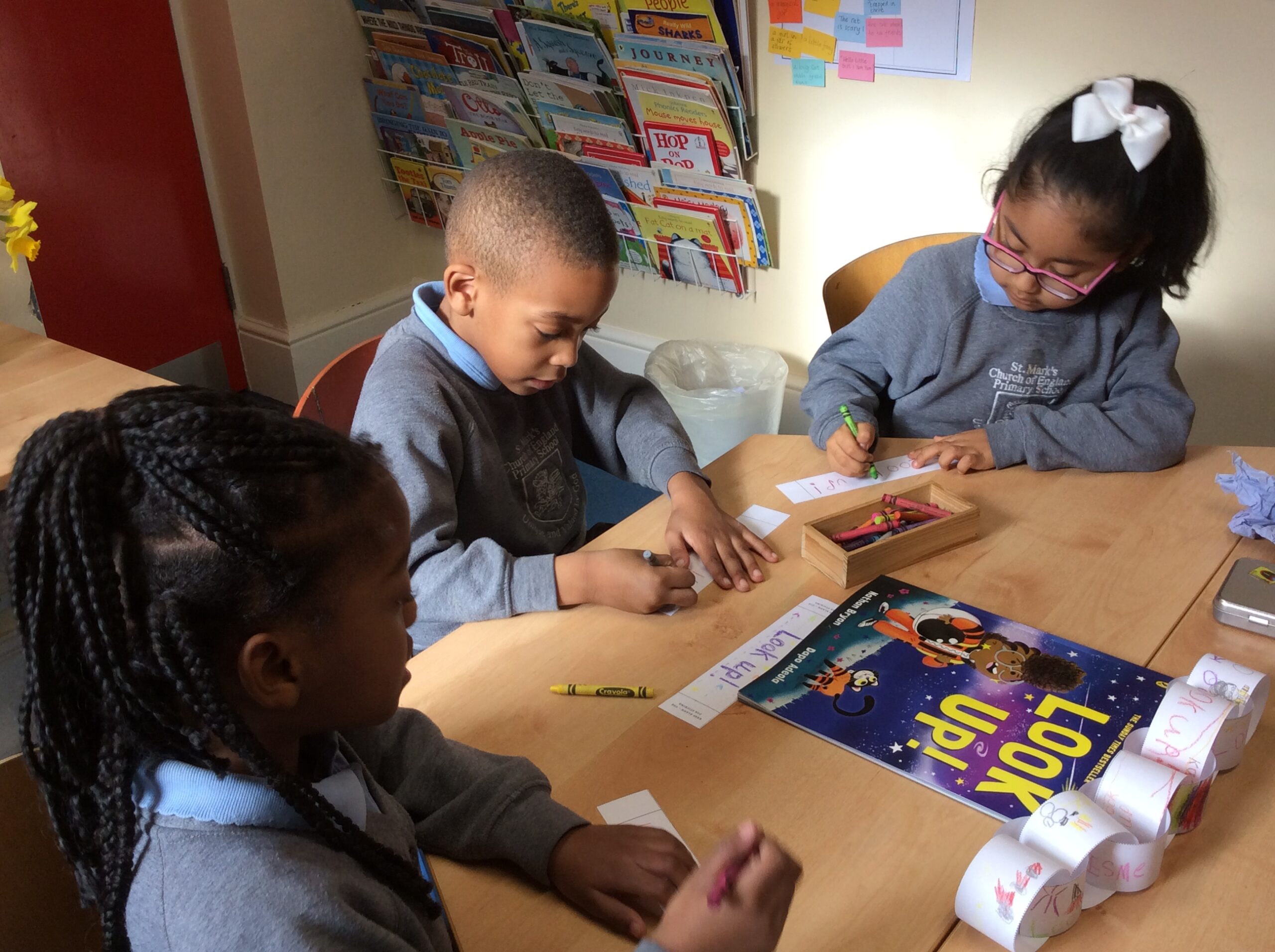
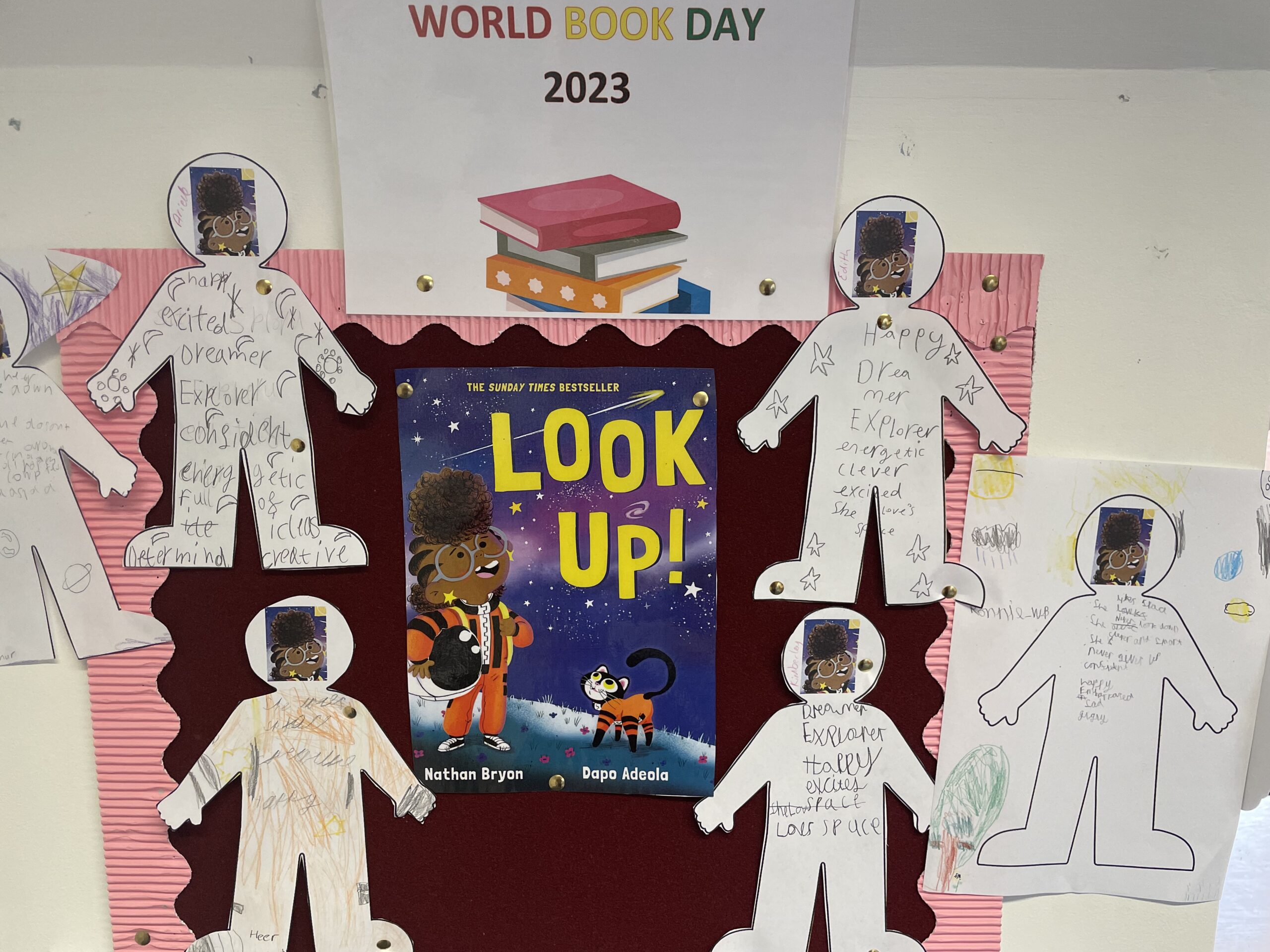
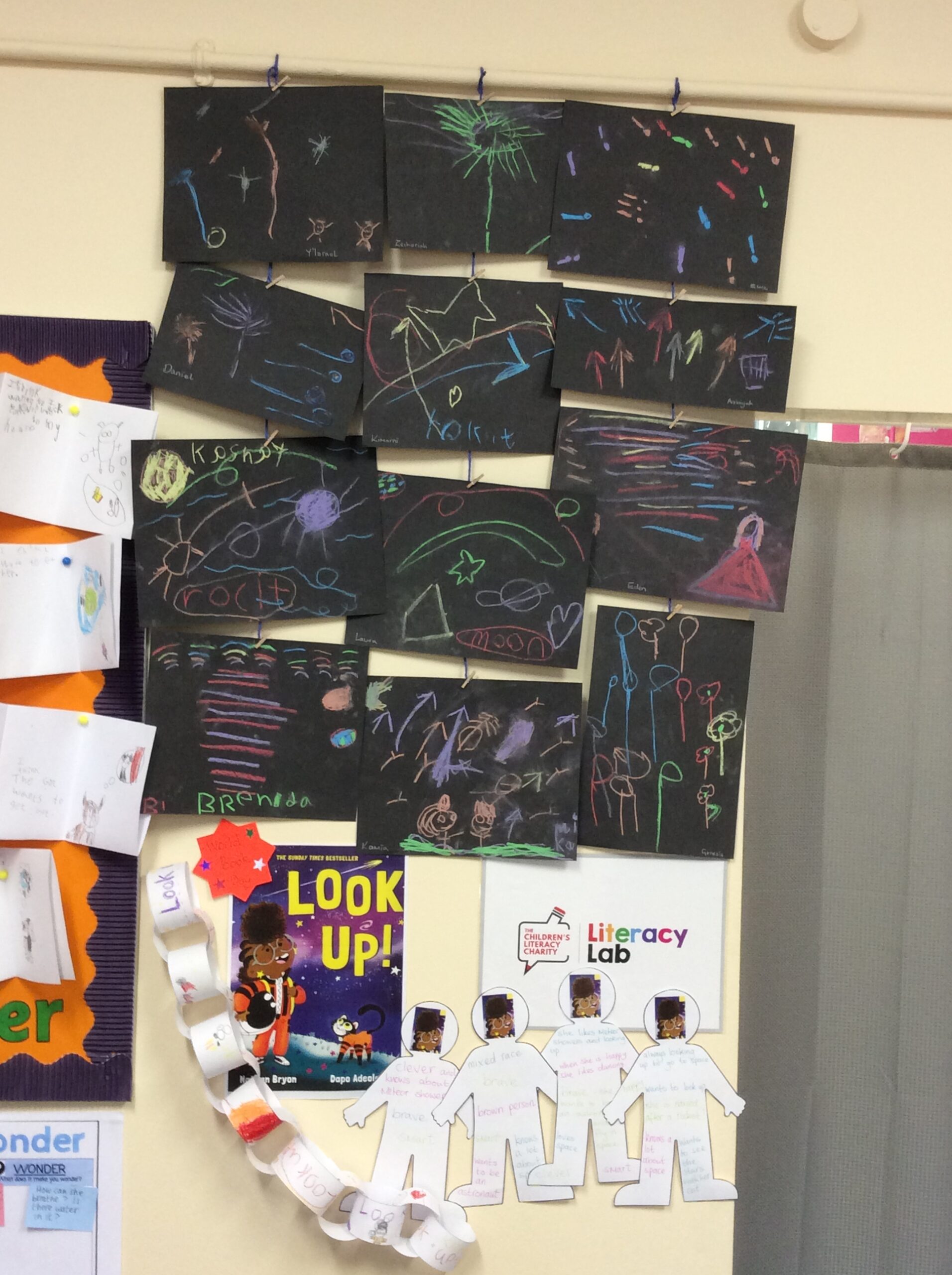
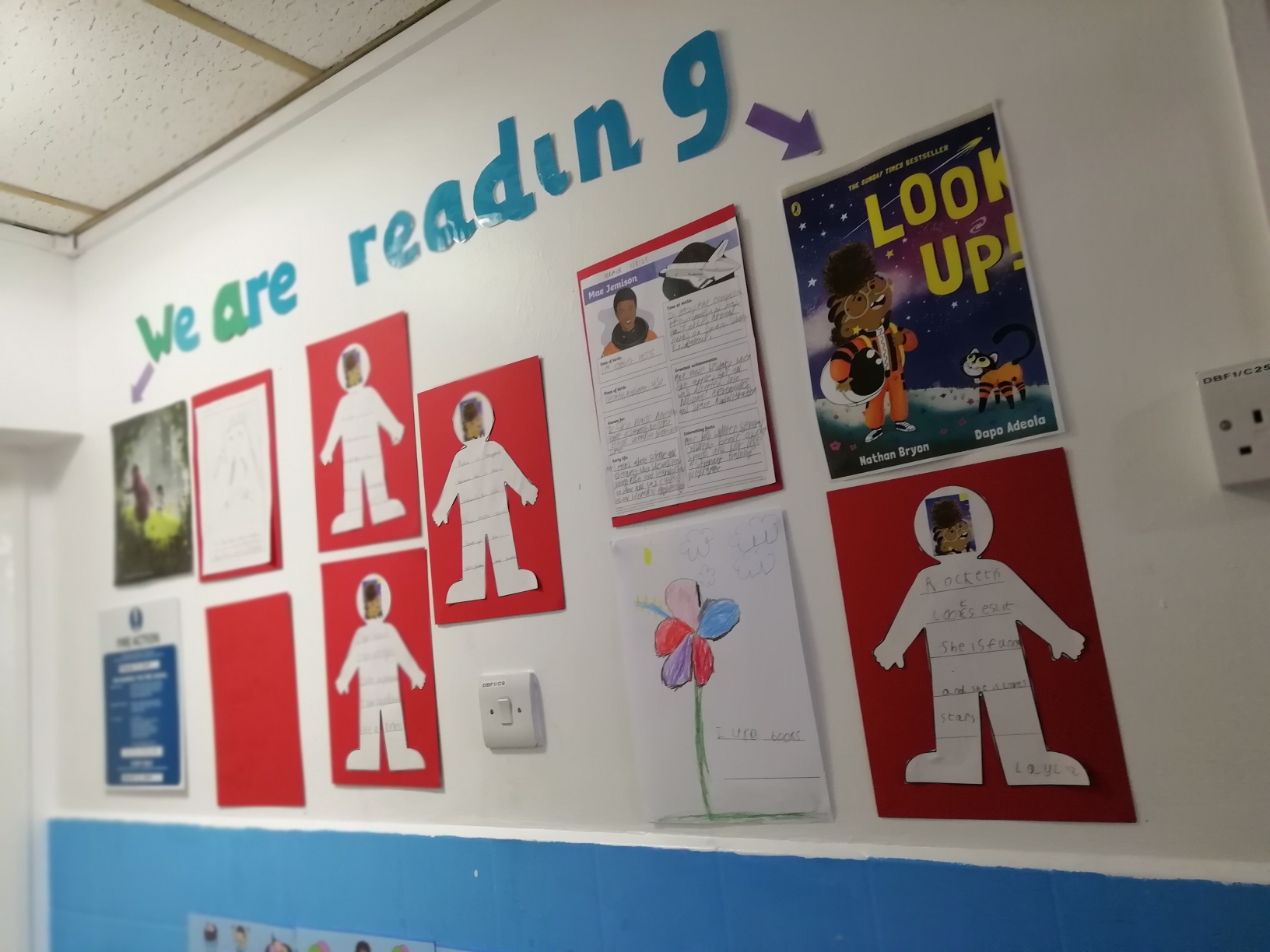
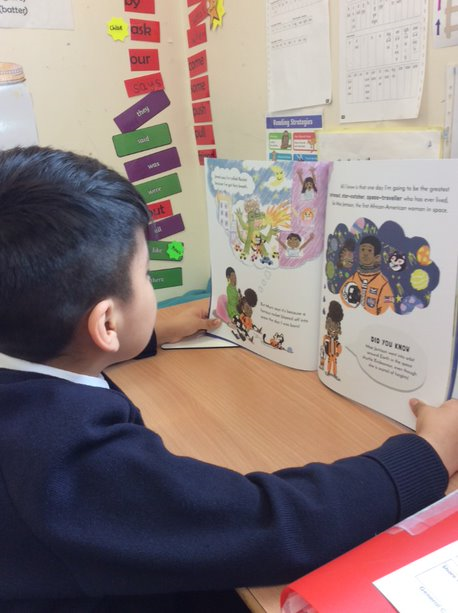
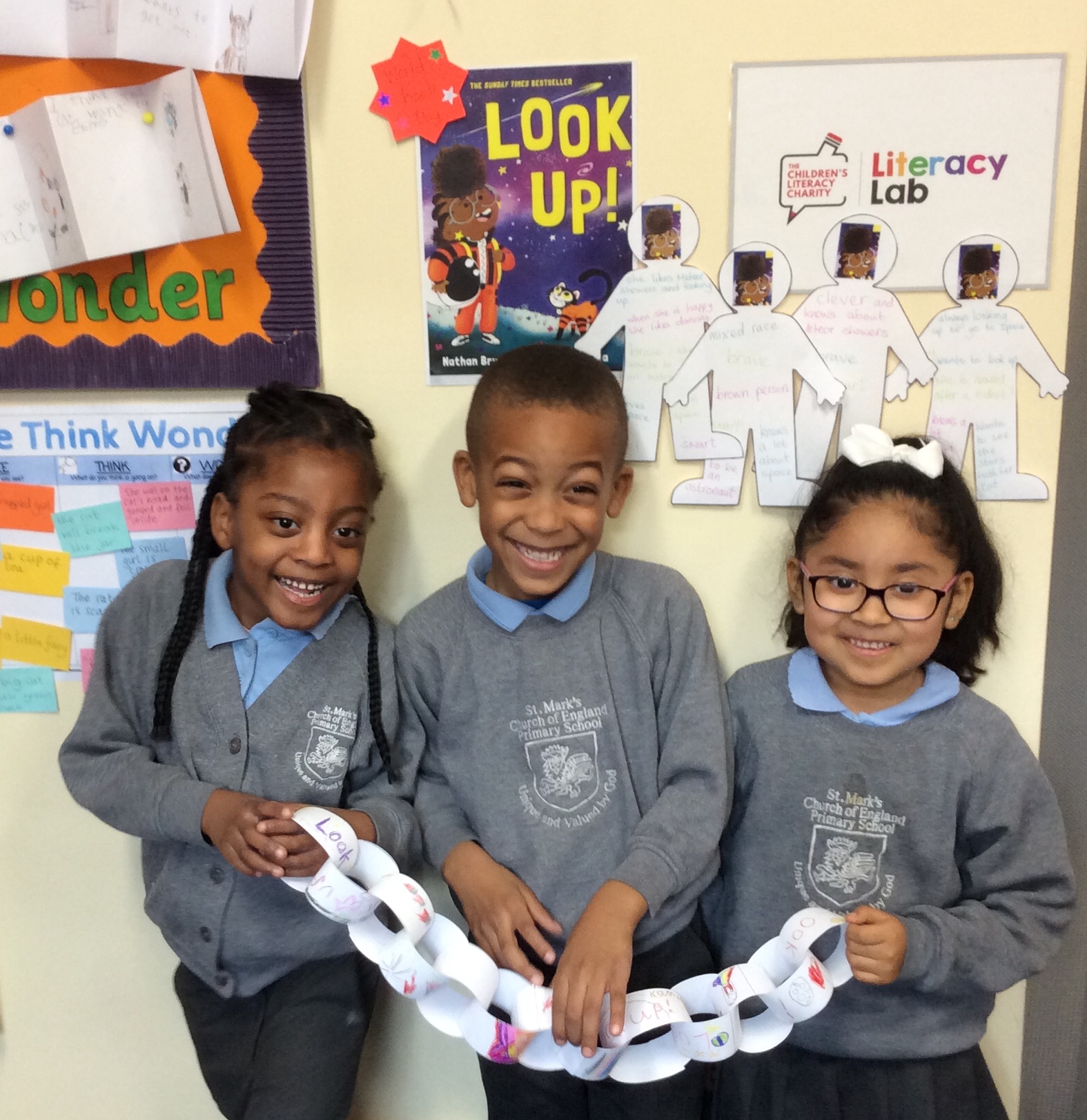
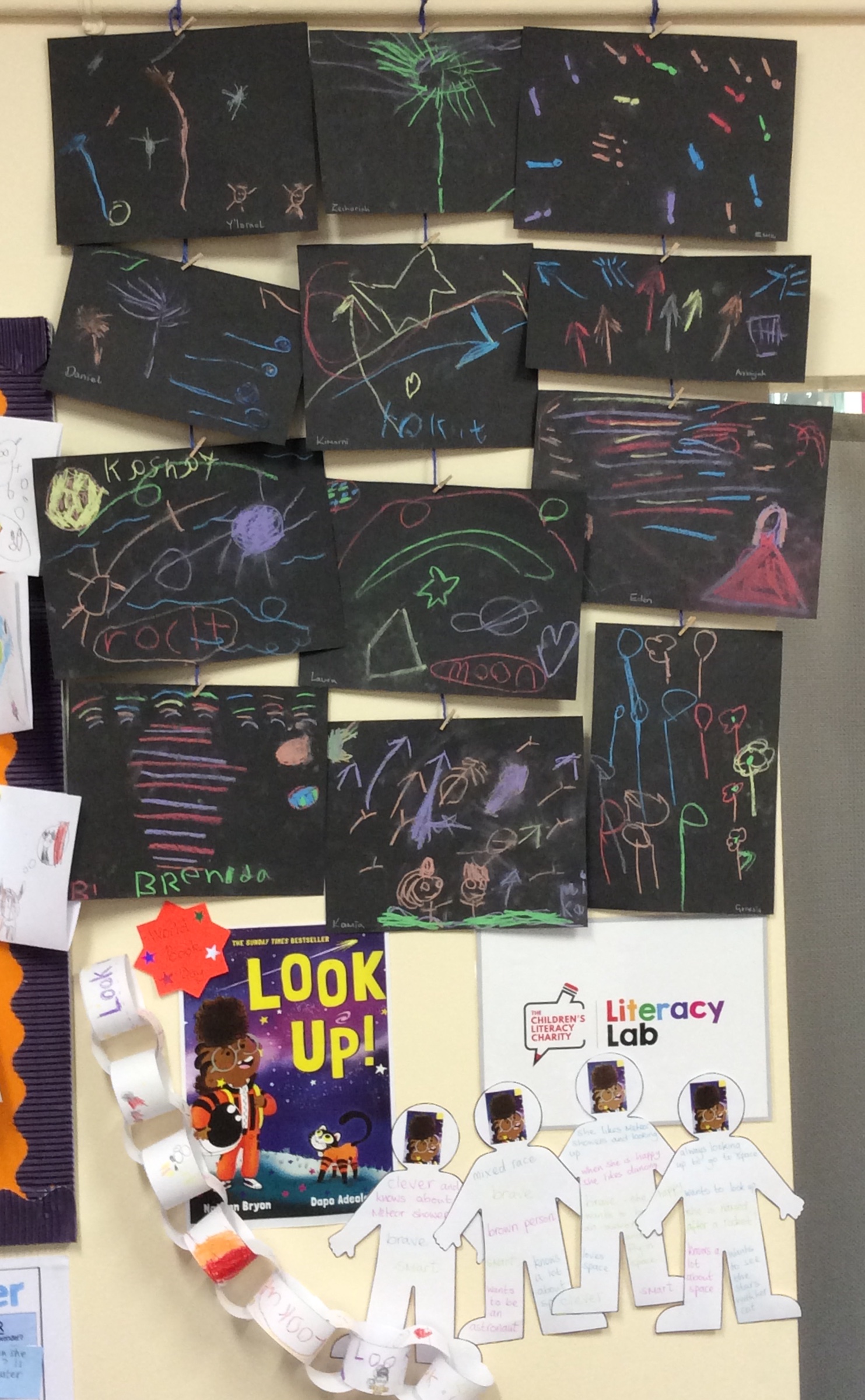
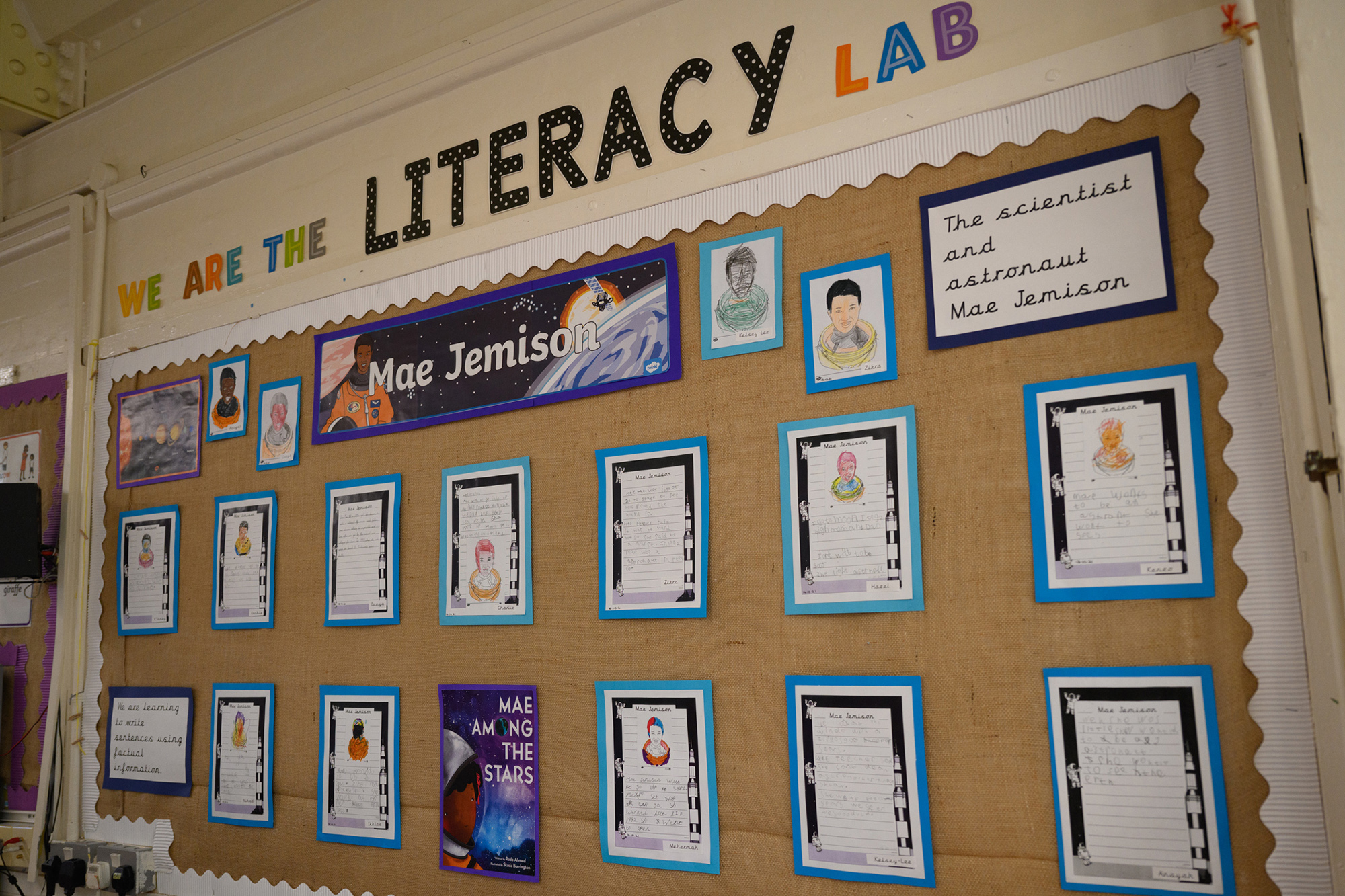
This year, every Literacy Lab received two wonderful new books, Look Up! by Nathan Bryon (illustrated by Dapo Adeola) and Our Tower by Joseph Coelho (illustrated by Richard Johnson).
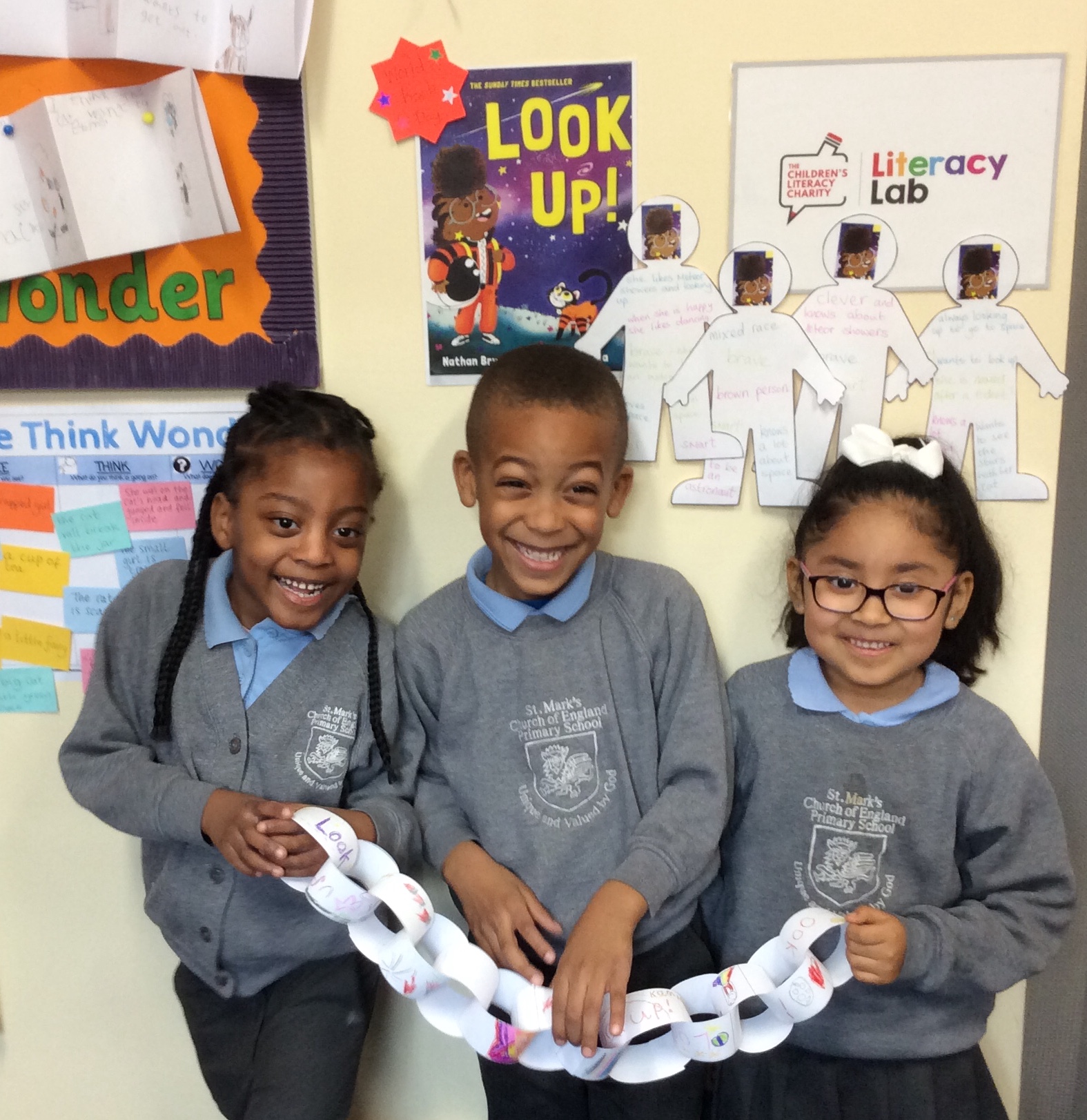
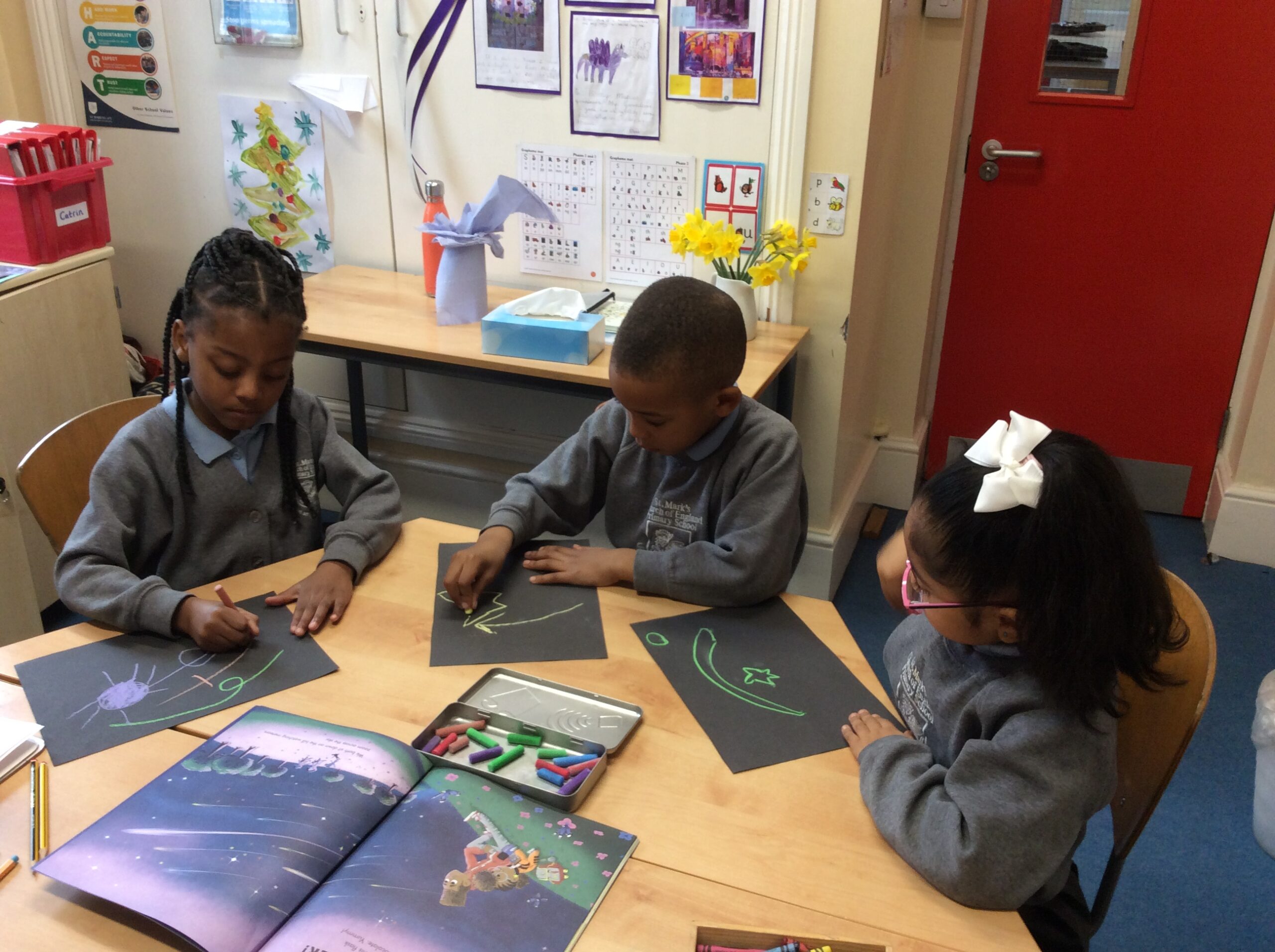
Our tutors enjoyed sharing the books with the children and introduced a variety of activities including amazing drawings of meteor showers, paper astronauts with character profiles and descriptions inspired by the story in Look Up! They explored positive and negative vocabulary and drew maps and their own designs of a tree-grown man inspired by Our Tower, and also created wonderful literacy paperchains, linking elements of the story together.
Our highly trained tutors help children to delve into the magical world of books and develop a joy of reading.
We were really impressed with the children’s creativity for World Book Day this year. Our highly trained tutors teach the building blocks of reading, supporting young children to apply their phonics and practice their reading fluency in order to delve into the magical world of books and develop a joy of reading.
In our dedicated Literacy Lab spaces in primary schools, we help disadvantaged children to close their literacy gap and our expert tuition covers all the key areas of literacy, with a particular focus on comprehension as well as reading, writing, speaking and listening.
We had a great week celebrating World Book Day 2023, and as you can see from all the photographs the children really enjoyed our chosen books!
For every pupil who is eligible for Pupil Premium, schools receive £162 of funding from the NTP but the NTP funding does not have to be used only for Pupil Premium children
If a school wishes to access external tutoring, the NTP will cover 60% of the tutoring cost, up to a maximum hourly rate per pupil of £18
For Reading Lab, the 10-week, 1:3 programme (15 hours, delivered twice a week in 45 minute sessions) costs £18 per hour so the full cost per pupil is £270 per 10 week block
Using NTP funding to subsidise this will mean the school only pays 40% of the £18 per hour cost ie £7.20 per hour or £108 per pupil per programme
The NTP subsidy is most cost effective when used against our Reading Lab intervention
While NTP funding can be used against our Literacy Lab programme, because the Literacy Lab hourly costs are higher than £18, the school will still only receive 60% of £18 – £10.80 per hour – as the NTP contribution towards the Literacy Lab cost.
Isabel Greenwood, CEO at the CLC comments: “We have always been very proud of the high standards of our specialist tuition and the difference we can make to a child’s life. While we are a small charity, it is pleasing that the quality of our work has been recognised by the DfE. Our catch up Reading Lab programme was our response to the growing evidence that disadvantaged children in particular were adversely affected by Covid lockdowns. We support some of the most disadvantaged children in society, giving their literacy skills a much needed boost. Results so far are very encouraging and we look forward to working with more schools and helping more children to close their literacy gap”.
“While there is often and rightly a focus on the mechanics of learning to read, talking is a vital part of literacy and the reading process.” In this blog, our Education Lead, Julie Taylor discusses why ‘book talk’ is so critical to the development of vocabulary, early comprehension and above all pure enjoyment of reading.
“Research has been published revealing that a fifth of our children are leaving school without passing English Language and Maths at GCSE. Of these students who were tracked from the age of three, just under half did not reach the expected levels of literacy and numeracy at the age of five. There must be some correlation here.
Children who are disadvantaged in those crucial early years are undoubtedly suffering the consequences as they hurtle through the education system towards public examinations. Other recent research from Speech and Language UK states that 1.7 million children are at risk of not being able to talk or understand. This alarming statistic adds to the deepening crisis around literacy and the development of talk not only in the Early Years but from birth.
Through our work in schools, we know that the development of literacy skills starts with talking about books.
While there is often and rightly a focus on the mechanics of learning to read, talking is a vital part of literacy and the reading process. Through our work in schools, we know that the development of literacy skills starts with talking about books, from board books for babies, to picture books, leading to more complex chapter books. But you cannot talk about a book if you don’t have access to one.
One in five children in England do not own a book of their own.
One in five children in England do not own a book of their own. Covid has undoubtedly compounded the problem but this sad statistic highlights the ever-growing chasm between advantage and disadvantage. If owning books is ‘integral to encouraging children to develop good reading habits and increasing literacy levels,’ as stated by Jonathan Douglas, Chief Executive of the National Literacy Trust, then as educators, we have a deepening crisis on our hands. Even for someone who has worked in Education for my entire career, I find it startling to learn that children who own a book of their own are six times more likely to read above their expected level for their age. As a charity, working with some of the most disadvantaged children, our fears lie with those children who are not accessing any reading materials at home.
As much as schools work hard to try to compensate for the lack of exposure to quality books in those formative years, it is a challenging task to overcome those lost years where children have lacked that immersion in all of the ‘book talk’ that is so critical to the development of vocabulary, early comprehension and above all pure enjoyment of reading.
In partnership with our schools, we are starting to run sessions for parents and carers all about how ‘Book Talk’ is fun and engaging for young children and provides every opportunity for developing those crucial language and communication skills. It provides an opportunity to use the language of prediction: What do you think this book is going to be about?What do you think will happen next? Children can talk about the pictures, explain what is happen in the story, retell the story themselves using the pictures, give their opinion about a book: who was your favourite character? What was your favourite part of the story? Both children and adults can act out the speech together, children can join in with rhymes and enjoy a valuable daily routine which will develop many of the building blocks to literacy.
School libraries have become a more important resource than ever yet one in four schools in disadvantaged area still do not have a library.
School libraries have become a more important resource than ever yet one in four schools in disadvantaged areas still do not have a library. Thanks to a campaign led by the author Cressida Cowell and Booktrust, “Life-changing libraries” funding has been secured to create six life-changing libraries and to support other schools to develop gold standard library provision. Studies have shown that vulnerable children benefit from library facilities the most and that reading for pleasure is more important for success than parents’ socio-economic status.
Learning how to enjoy a book really can help develop skills for life.
While our specialist tutors work hard to close the literacy gap for the most disadvantaged children, our schools tell us that of equal importance, or perhaps even greater value, is the way in which a child who begins to engage with reading and starts to enjoy books, becomes more confident and ultimately is more resilient. Learning how to enjoy a book really can help develop skills for life.”
As we know, reading takes many forms and the internet is overflowing with wonderful resources that parents can access for free to promote a love of reading. For more information about ‘Book Talk’ and websites providing free access to books, please follow the links below:
“Without specialist support the most disadvantaged pupils will never catch up”
Reema Reid, Head Teacher at Hollydale School, and also Head Teacher of the Year 2021, was the keynote speaker at our 30th anniversary event this year. In a moving and powerful speech, Reema shared her thoughts on the importance of literacy, the challenge of getting catch up provision to work well and her experience of partnering successfully with the charity to close the literacy gap for children who need the most help.
Reema Reid has been the Head Teacher of Hollydale Primary School, in the London Borough of Southwark, since 2013.
Hollydale is a school which serves an area which is socially, economically and educationally deprived and where nearly40%of pupils receive free school meals. It is also a school which focuses on opportunity, with the ambition for all pupils to be the best that they can be and to reach their full potential.
But there are many challenges.
On average, children from a poor background start school 19 months behind those from wealthier backgrounds and sadly, for some, the gap in reading and writing skills widens as they get older.
This literacy gap is linked to complex factors such as parental economic circumstances and challenging home lives and in spite of high quality teaching in England, one in five children leave primary school without reaching expected levels in reading and writing.
Hollydale School works hard to help close the literacy gap for those children who need the most help and since 2015 The Children’s Literacy Charity has worked in partnership with the school.
As the keynote speaker for the charity’s 30th anniversary event, Reema spoke powerfully and movingly about her experience as a Head Teacher:
“They say the world belongs to those that read. A child who reads will be an adult that thinks.”
“In 2010, when I was dropping my youngest daughter off to a school in Lambeth I noticed a brightly lit room with attractive reading displays, with common words displayed and a rich literacy environment. I knocked on the door and asked what was the focus of this classroom. The tutors said that this was a dedicated Literacy Lab space run by a charity where they supported children to close their literacy gap and become confident with their reading skills. I observed expert tutors who were passionate and committed to helping children become readers.”
“I have seen the impact of The Children’s Literacy Charity on children at Hollydale School”
“I vowed that when I became a substantive Head Teacher, I would work with such an intervention which could so effectively change children’s lives. I have been true to my word and I have seen the impact of The Children’s Literacy Charity on children at Hollydale School. Here is just one example:
Alex* was seven years old and still not reading even though teaching at Hollydale School is robust and focused with a strong emphasis on the reading curriculum. We referred Alex to the charity’s Literacy Lab where children who need extra help attend 45-minute one-to-one or small group tutor sessions twice a week.
Within two terms, Alex was not only reading but had increased his phonics knowledge and showed accelerated progress. As importantly, he began to read for pleasure and grow in confidence.
He became not only a reader but a leader too and is now one of the Reading Buddies in my school who read with younger children.”
“This is a great example of the power of intervention”
“Alex passed his Y6 end of stage reading SATs and was at the expected level for reading by the time he left primary school, ready for that important transition to secondary school. This is a great example of the power of intervention. I’ve seen many children at Hollydale School make rapid progress with the support given by The Children’s Literacy Charity tutors.
I have always been an educator who has been passionate about literacy and I have explored and implemented many interventions designed to support children’s reading.
However, The Children’s Literacy Charity has proven that the impact of their one-to-one and small group teaching offers significant progress in developing reading skills and closing the literacy gap.”
And the need for specialist support has never been greater.
“The pandemic has caused a widening gap for children who are not readers and a report in July 2021 showed that primary pupils were further behind expectations than those at secondary school.
As a Head Teacher I have found that not only am I trying to meet the needs of more pupils who are further behind than ever but increased pressure on budgets mean I have less to spend on much needed intervention.
Without specialist support the most disadvantaged pupils will never catch up. Catch up is easy to say but difficult to get right. Not all interventions are effective in boosting attainment and no single programme is enough. However, working with The Children’s Literacy Charity for over five years, I have seen the impact that it has had on my pupils reading, comprehension, confidence, resilience and reading for pleasure. So many are now readers and they can grasp all the opportunities available to become leaders.
Nelson Mandela said famously that ‘Education is the most powerful weapon which you can use to change the world’. He also said: “A good head and good heart are always a formidable combination. But when you add to that a literate tongue or pen, then you have something very special.” As I say to my children: if you read for just 15 minutes a day in one year, you will have read 1,000,000 words!
Thank you, The Children’s Literacy Charity for all your support and for being such an integral part of my team.”
“Together, I hope we will close the literacy gap and broaden horizons for many more children.”
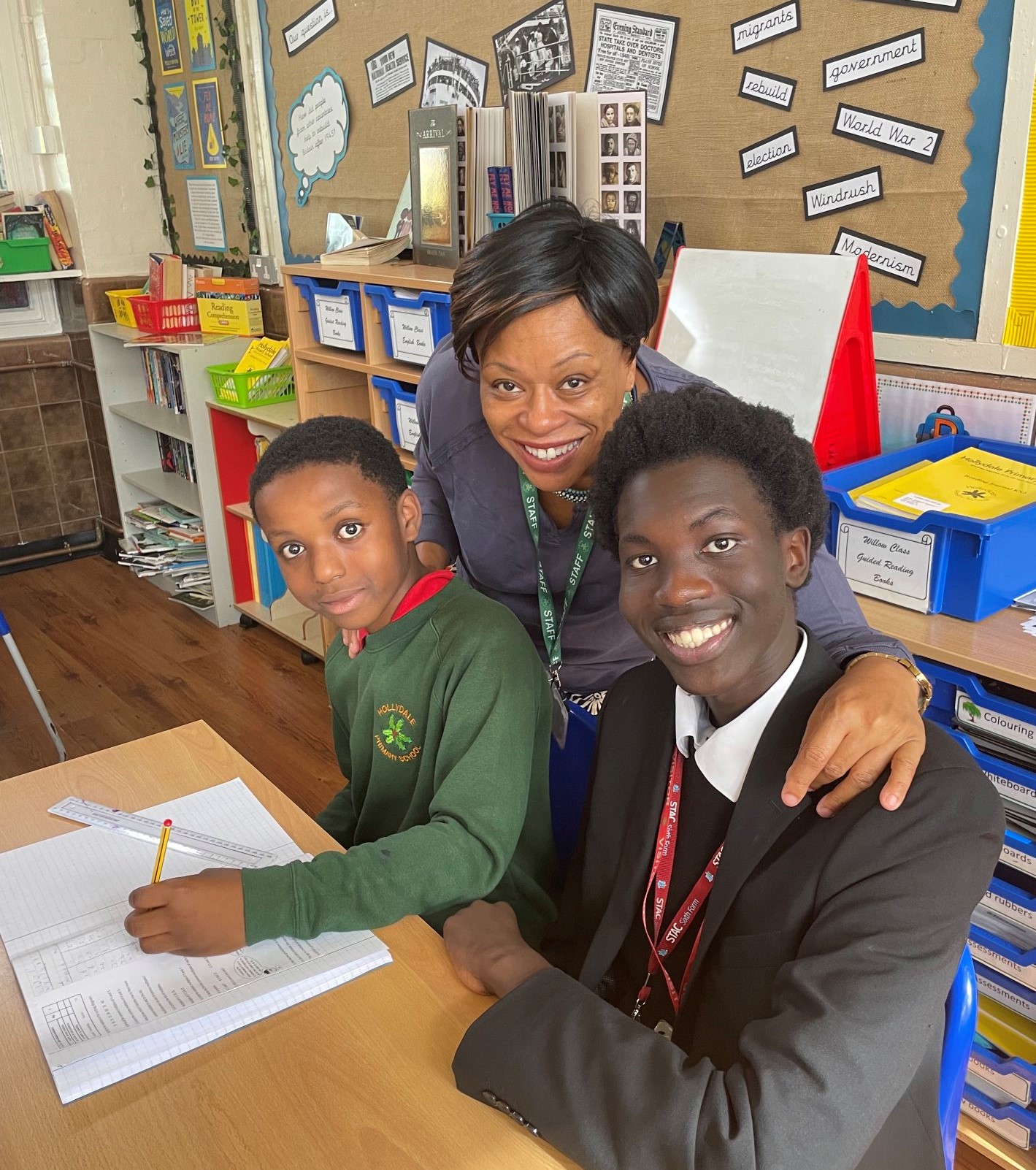
Photographs of children who attend the Literacy Lab at Hollydale Primary School.
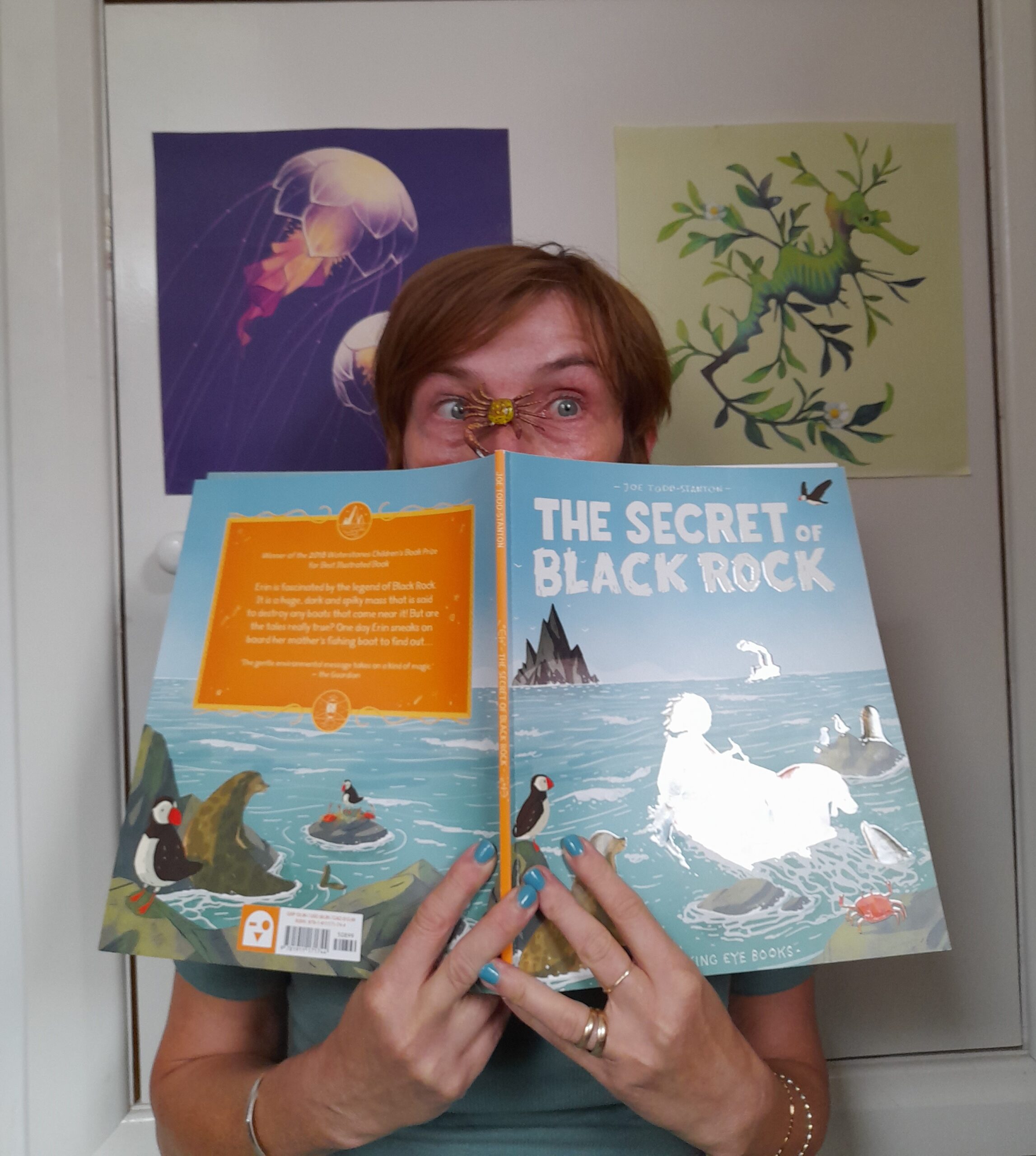
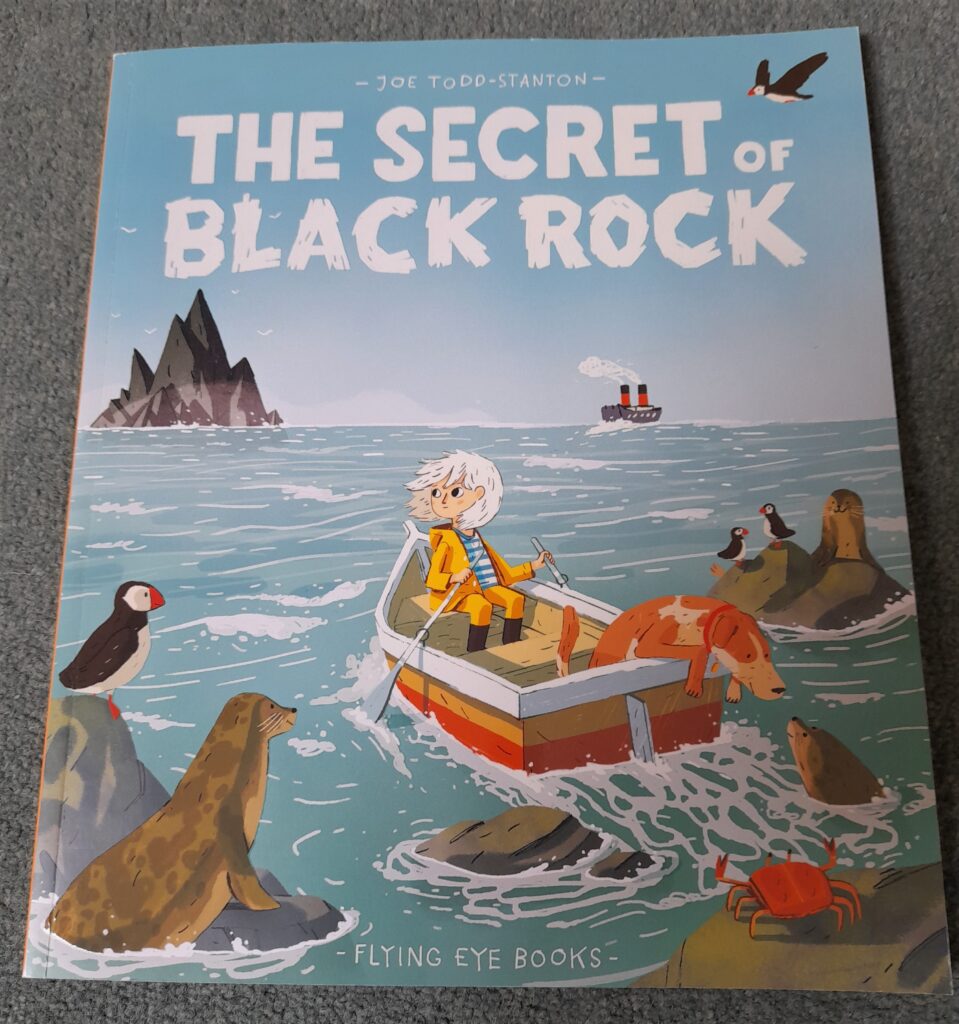
Over the Summer we are sharing some of our favourite children’s books. Beata, our Programme Delivery Manager has chosen a second book by Joe Todd-Stanton; The Secret of Black Rock
“This book inspires in young children an awareness of the natural world, its wonders and its importance.” reflects Beata. “And it’s a great read for children when heading to a beach holiday destination.”
“The story introduces us to Erin, whose mother is a fisherwoman who goes fishing, and like other fishermen, she is worried about crashing into the mysterious and dangerous Black Rock.
The story is simply told through the wonderful and engaging illustrations by Joe Todd-Stanton. Every day Erin tries to hide on her mother’s boat so that she can see the Black Rock for herself and every day, Archie, the dog would sniff her out. But one day Erin outsmarts Archie and unbeknown to her mother, hid and sails towards the Black Rock. The sea becomes rough and the boat turns upside down with Erin sinking deep into the dark waters around the Black Rock.
Rather than feeling scared, Erin’s eyes open with wonder at the sight of an underwater secret and she enters a rich sea animal kingdom where many animals live safely in a protective proximity of the Black Rock: glowing jellyfish, koi carp and anglerfish among others. And, Erin understands that the Black Rock is a shelter to and a protector of many animals. The Black Rock extends its supportive arm and takes Erin back to the safety of the shore.
As Erin explains what she saw to all the fishermen in her village, she educates them on the real nature of the Rock. This is a magical and beautifully illustrated picture book aimed at Early Years and KS1 children, but is a joy to any age of reader with its unassuming environmental lesson about the world around us, how to better understand it and look after it, in the way that benefits the environment as well as us.”
…watch out Beata, looks like a crab has escaped from Black Rock and is pinching your nose! 🙂
To provide the best experiences, we use technologies like cookies to store and/or access device information. Consenting to these technologies will allow us to process data such as browsing behaviour or unique IDs on this site. Not consenting or withdrawing consent, may adversely affect certain features and functions.
Functional
Always active
The technical storage or access is strictly necessary for the legitimate purpose of enabling the use of a specific service explicitly requested by the subscriber or user, or for the sole purpose of carrying out the transmission of a communication over an electronic communications network.
Preferences
The technical storage or access is necessary for the legitimate purpose of storing preferences that are not requested by the subscriber or user.
Statistics
The technical storage or access that is used exclusively for statistical purposes.The technical storage or access that is used exclusively for anonymous statistical purposes. Without a subpoena, voluntary compliance on the part of your Internet Service Provider, or additional records from a third party, information stored or retrieved for this purpose alone cannot usually be used to identify you.
Marketing
The technical storage or access is required to create user profiles to send advertising, or to track the user on a website or across several websites for similar marketing purposes.